In modern UK society, where spending is just a tap away, and people are increasingly running into financial crises and wrecks, building financial literacy for kids is one of the best things you can do for your child as a parent.
The earlier children understand how money works, the more confident and responsible they become as adults. You should know that teaching kids about money doesn’t require complicated lessons or financial expertise. You can use simple, everyday moments like giving pocket money, talking through choices at the shop, or helping them save for something they truly want.
Why Financial Literacy Matters For Children

Image: Unsplash
When done right, financial literacy for kids equips children with lifelong skills: how to save, spend wisely, and even give generously. In this guide, you’ll discover five practical, real-life strategies to raise money-smart kids, along with age-appropriate tips and common mistakes to avoid. Think of it as your starting point for effective and impactful children’s financial education.
Financial literacy for kids is the process of teaching children important financial skills, habits and knowledge needed to manage their financial lives and build sustainable wealth in the future. This will teach them to know when their credit scores are good. It involves teaching your kids how to save, budget, invest and handle money responsibly. Financial literacy matters for the following reasons.
Building Lifelong Money Habits
Children don’t naturally grow to become good with money. It’s something they learn over time, just like reading or writing. According to a Cambridge University study, financial habits are formed by the age of seven. The habits formed at this age largely influence a person’s habits throughout their life.
So, early exposure to financial literacy for kids helps them build healthy money habits like saving out of their pocket money, planning before spending and understanding delayed gratification. For example, a child who learns to save part of their allowance is more likely to grow into an adult who budgets and invests wisely. With time, these habits become a lifestyle, turning them into adults who don’t just earn money but also know how to manage it wisely.
Preventing Future Financial Mistakes
Many adults struggle with bad money habits like debt, impulsive spending, or the inability to save. It’s not necessarily that they’re careless; it’s simply because they were not taught better. This is why teaching kids about money early is very important. They need to understand simple financial concepts like:
- Needs vs Wants
- Spending vs saving
- Short-term vs long-term financial goals and how they’re applied practically in a way that works.
Building good money habits early enough grooms them into adults who can handle money more responsibly.
Teaching Values Alongside Money
Financial literacy for kids also involves teaching them about values. Through children’s financial education, kids also learn:
- generosity
- patience
- respect; and
- responsibility.
When you teach a child to give, save, and spend intentionally, you’re not only moulding their financial habits but also their character as well. Financial literacy is very important for both male and female children. This will bridge the gap in the motherhood penalty as they grow and mature into motherhood.
5 Ways To Teach Financial Literacy For Kids

Image: Unsplash
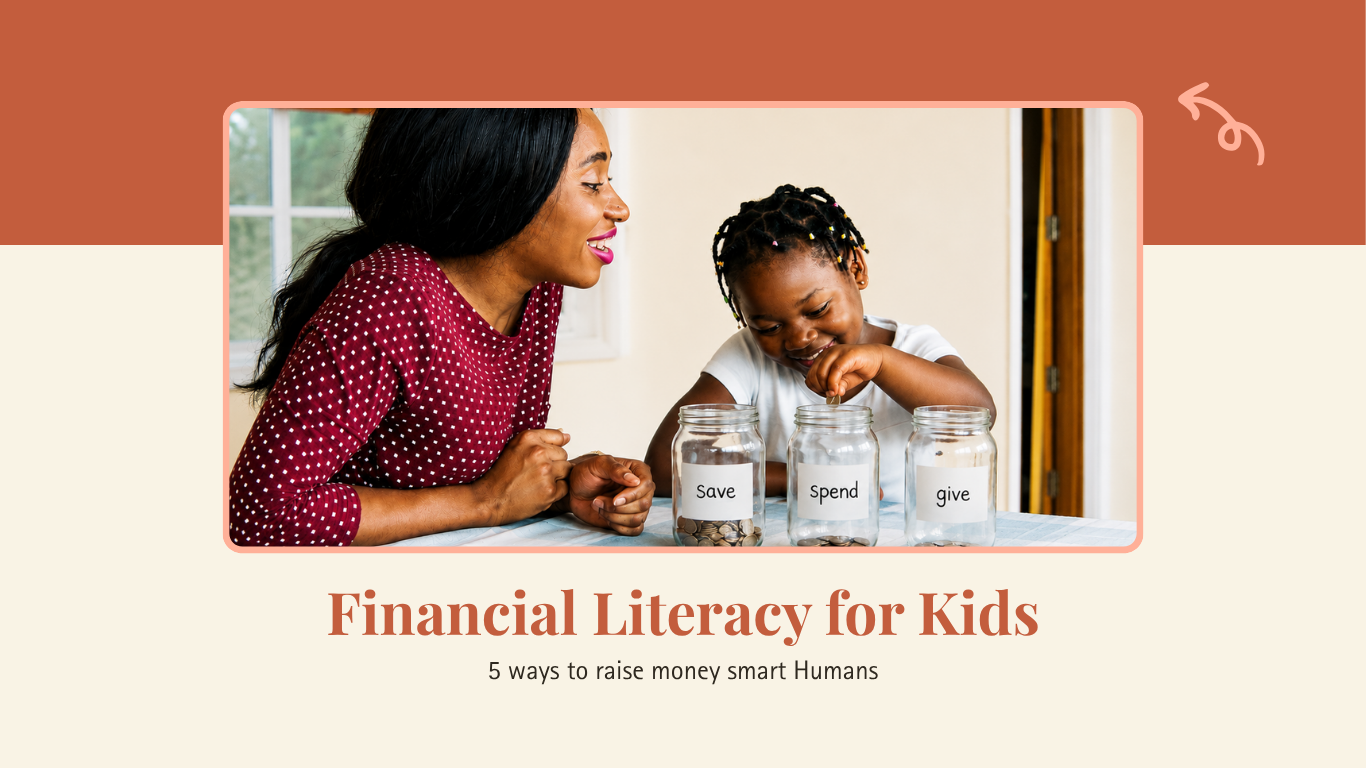
One of the simplest and most effective ways to build financial literacy for kids is the Spend-Save-Give method. This method helps them understand balance because it teaches them that money is not just for spending but serves other purposes:
- Spending (enjoy now)
- Saving (plan for later)
- Giving (help others)
It’s actually very simple. Here’s how you can practically apply this method:
- Give your child three jars (or digital equivalents)
- Label them: Spend, Save, Give
- Then let them know that every time they receive money, they should divide it among the three.
Introduce Age-Appropriate Budgeting
Financial literacy also involves teaching them about budgeting. An effective way to do this is to make it sound simple and fun.
For the younger kids:
- Give them money for the week. You can put it in an envelope or a jar
- Then assign money for different purposes (including saving) in the course of the week.
As they grow, you can introduce more structure, like:
- Writing things down
- Tracking spending
- Teaching them simple kids’ budgeting tips, like creating a monthly budget planner
Also, you can try introducing them to budgeting apps or simple trackers. As they grow, you can introduce concepts like using the 50/30/20 budget method in a simplified way.
Set Goals and Reward Progress
Children learn best when they have something to look forward to. For instance, saving for a toy, a game, or an outing gives money real meaning. So, instead of just giving them what they want, guide them:
- Help them set a savings goal
- Break the cost into smaller amounts
- Track their progress
- Celebrate milestones, especially when they finally achieve that goal
This is a way of strengthening financial literacy for kids that also reinforces patience and discipline in them.
Make Money Lessons Interactive
Realistically, kids won’t really sit through long, boring lectures about money. Make the lessons interactive and fun. Engage them with games, challenges, and real-life situations. You can engage them in interactive and practical lessons through:
- Letting them help compare prices while shopping
- Giving them a small budget to plan a family treat
- Using board games that involve money decisions
- Turning everyday decisions into conversations
These kinds of practical lessons make teaching kids about money responsibly both fun and memorable.
Lead by Example
Children watch more than they listen. Your habits influence their understanding of money more than any lesson you’ll ever teach them. If they see you:
- Budgeting regularly
- Avoiding impulse spending
- Saving money while staying social
They’ll naturally adopt similar behaviours. So, in many ways, your actions speak louder than any lesson on financial literacy for kids ever could.
Adapting Lessons By Age

Image: Unsplash
Young Children (3–7 Years)
At this stage, it’s best to keep the lessons simple and visual.
- You can use coins and physical jars that they can touch and feel.
- Explain money as a tool for choices using simple language
- Introduce basic saving habits
The goal at this stage is not for them to fully understand, but it’s just to build familiarity and comfort. At this stage, you’re just laying the foundation for future lessons.
Older Children (8–12 Years)
Children in this age bracket are capable of understanding things more. So you can:
- Introduce them to tracking what they spend using simple charts or notebooks
- Teach them to set small savings goals
- Encourage small earning opportunities
- Teach them basic kids’ budgeting tips
This is a great time to deepen children’s financial education with real-life examples.
Teenagers (13–18 Years)
Teenagers are at the stage where they’re closer to financial independence.
- Open a bank account for them
- Introduce them to digital budgeting tools
- Teach them saving, spending and even basic investing
For the girls, you can also connect lessons to your own journey using a complete personal finance guide for women so they can understand how money skills evolve.
Incorporating Financial Discussions Into Daily Life
You don’t really need special “money classes” to teach financial literacy for kids. Use everyday moments:
- Grocery shopping can become a practical lesson in comparing prices
- Paying bills can be an opportunity to explain budgeting
- Allowances can be used to teach planning
These practical lessons make them learn better and remember more.
Family Money Meetings
This doesn’t have to be formal or ceremonial. It can take the form of casual conversation among family members. This can be monthly or quarterly. Make your kids a part of the conversation. Let them participate in:
- Planning a family outing
- Setting savings goals
- Talking about spending priorities
This will help them build confidence and make teaching kids about money a shared experience.
Positive Reinforcement
Children are very responsive to encouragement. So, always ensure that you acknowledge and encourage them when they:
- Save consistently
- Make thoughtful spending choices
- Show generosity
This reinforces positive habits and strengthens financial literacy for kids over time.
Common Pitfalls And How To Avoid Them
The common pitfall are as follows
Overcomplicating Lessons
Teaching kids about money should be as simple as possible. Don’t make use of financial jargon or try to teach everything all at once. Lessons should be simple, clear and relatable and should come in bits.
Ignoring Mistakes
Mistakes are part of learning. If your child spends all their money too quickly, resist the urge to fix it immediately. Let them experience the consequence; it’s one of the most powerful lessons in how to teach kids about money.
Neglecting Giving
Many parents focus on teaching their kids to save and spend wisely but neglect teaching them how to give. When children learn to give:
- They develop empathy
- They understand balance
- They see money as a tool for good
This is an important part of raising money-smart kids.
In conclusion, raising financially confident children starts with intentional effort. By focusing on financial literacy for kids, you’re giving your children something more valuable than money itself. From the Spend-Save-Give method to everyday money conversations, these five strategies make teaching kids about money practical, engaging, and effective. The goal is to raise thoughtful, confident individuals who understand how money works. Take it one day at a time and just stay consistent. Also, remember financial literacy for kids is a journey; every conversation, every choice and every lesson are all part of the process that will eventually make a whole.
FAQs
How early should I teach kids about money?
As early as age 3. Start with simple concepts like saving, spending, and making choices.
What are simple ways to teach children financial literacy?
Use pocket money, saving jars, goal-setting, and everyday shopping conversations.
How can I make money lessons fun for kids?
Turn them into activities like budgeting games, price comparisons, or planning small events.
Should children learn about saving and giving?
Yes. Both are essential for building balance, responsibility, and empathy.
What tools help teach financial literacy for kids?
Jars, budgeting apps, savings trackers, and real-life experiences all work effectively.

Staff writer at Women Digest covering beauty, fashion, wellness and life.