
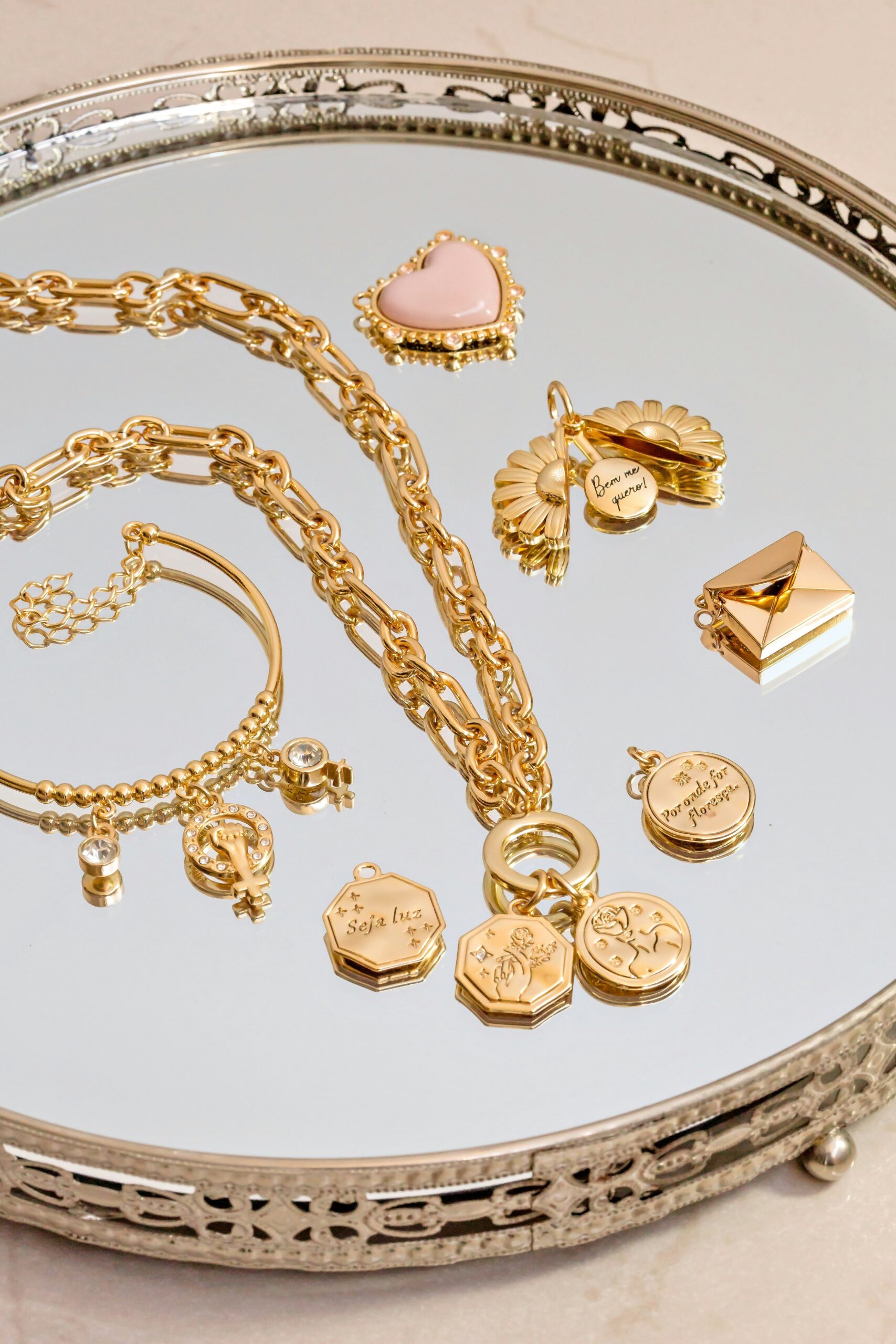
Knowing how to combine gold and silver jewelry is not about following regulations but more about being intentional. Combining metals is no longer a styling mistake; it is one of the most prevalent and versatile strategies for accessorizing.
Whether through layered jewelry, coordinated accessories, or subtle accents, this approach adds depth and personality even to the simplest outfit. When the equilibrium is perfect, the combined gold and silver look prioritized and new.
When it is not, the effect feels cluttered and strange.
Why Mixing Gold and Silver Works
The old standard that gold and silver should never be worn together is obsolete. It was for a period of fashion when coordinating perfectly, pairing your belt to your shoes and your earrings to your necklace, was considered the hallmark of dressing well. That reasoning has widely been replaced by a preference for individual style over tough supervision.
Combined metals now read as intentional instead of careless; so far, the combination has been tackled with some reasoning. The contrast between gold’s warm tone and silver’s cool, bright finish creates visual interest that one metal alone cannot. That pressure, when balanced, is precisely what makes combined jewelry look unique.
There is also a practical depth. Most women have jewelry made of both gold and silver. Harsh single-metal dressing limits what you can wear together, which means you won’t be able to wear half of your jewelry on an important day.
Understanding how to combine metals gives you the liberty to complete your collection all at once.
The variations are made up of three principles.
- Selecting a dominant metal,
- Generating repetition,
- Keeping your styles constant.
When Mixed Metals Look Chaotic
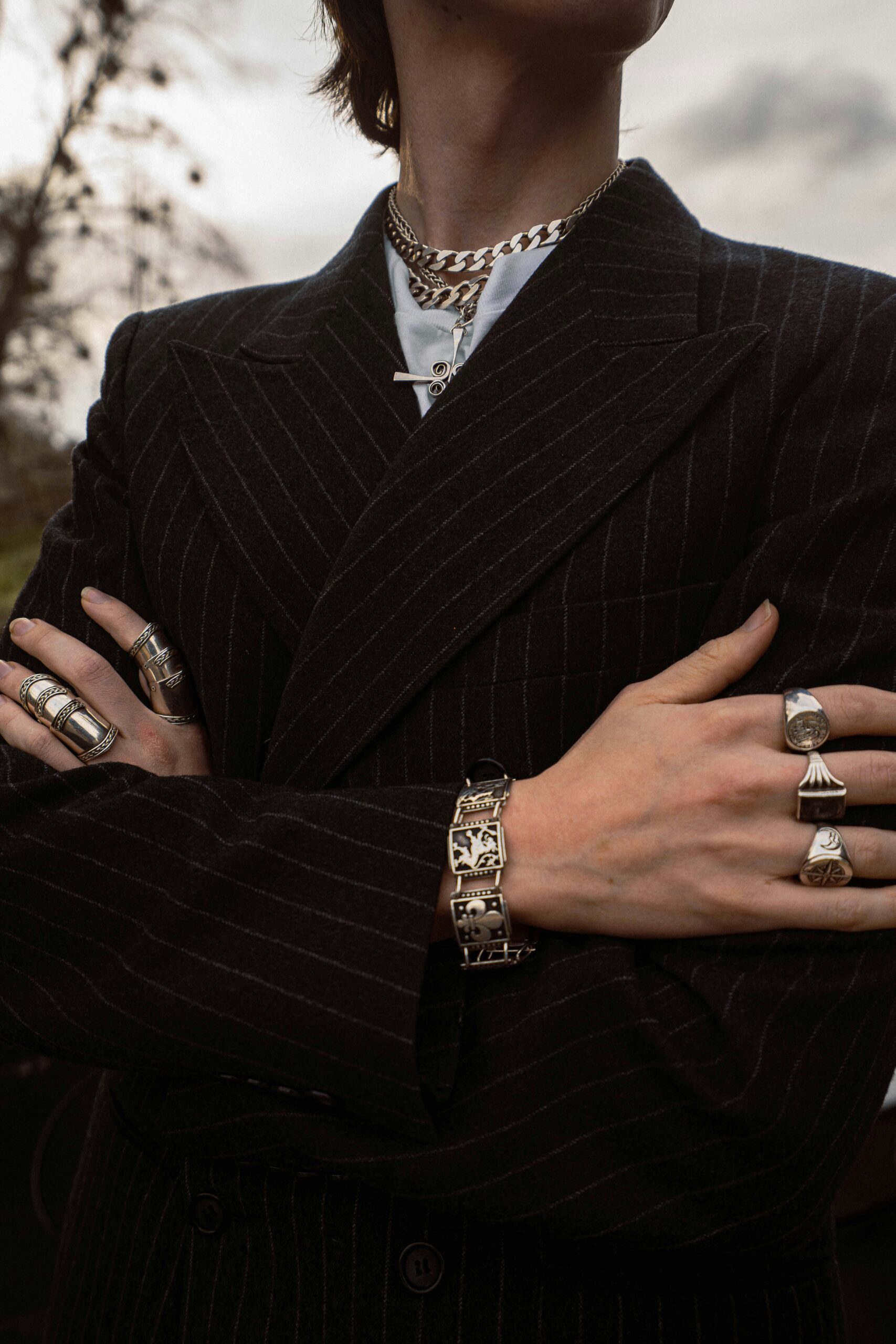
Combined metals become confusing when there is no imaginary logic holding them together. This usually occurs in one of two ways: too many pieces at once or too many conflicting styles in the same look.
Over-accessorizing is the most common mistake. Combining five necklaces, four rings, two bracelets, and a watch together, irrespective of metal, generates imaginary noise that overshadows the rest of the outfit. Jewelry should distinguish a look, not compete with it.
Mismatched styles generate the second type of catastrophe. Combining a very fragile, minimal gold chain with a large, chunky silver statement necklace makes both pieces look weird instead of complementary. The disconnect in length and weight is what we mean by “unorganized,” not the metal variation itself.
Having knowledge of what creates the chaotic look makes the answer clearer: decide on an imaginary lead, keep the length of your pieces constant, and allow each piece to have enough space to be seen on its own terms.
Start With a Dominant Metal
Every successful combined-metal look has one metal doing more of the imaginary operation. This is your dominant metal, the one that appears in significantly more pieces, or in the best-known position, and sets the overall mood of the jewelry.
Your basic metal does not need to outnumber the other two to one. It readily needs to feel like the base. If your most owned necklace is gold, your most visible ring is gold, or your watch is gold, that depicts the lead, even if you have the same number of silver pieces anywhere else.
To know which metal to lead, begin with the one you have more of, the one that complements your skin tone best, or the one that matches the outfit you are generating within. Warm skin tones often strive toward gold as a natural predominant; cooler skin tones tend to focus better on silver. But this is a starting point, not a regulation.
Two-tone pieces, jewelry that combines both gold and silver in a single item, are specifically important here. They function as a barrier between your metals and develop the combined look naturally, without demanding that you create the balance per piece.
Repeat Each Metal at Least Twice
Repetition is what differentiates a curated, combined-metal look from an accidental one. When a metal shows up only once, a single silver ring in an otherwise all-gold stack, for example. It is identified as forgotten instead of intentional. When it appears two or more times throughout various parts of the look, it becomes a part of the design.
If you are wearing gold as your basic metal, your silver should still appear at least twice. Two silver rings and a silver bracelet alongside predominantly gold necklaces and earrings give the silver enough presence to prove as a choice. One silver piece would look like an oversight.
Repetition does not necessarily mean symmetry. The silver pieces do not need to be on the same hand or at the same height. They simply need to be seen enough that someone looking at the overall look has an understanding that the combination was intentional.
Keep the Styles Consistent
The most important compatibility element in combined-metal styling is not the metal but the style and size of the pieces. Jewelry that shares a familiar aesthetic operates together irrespective of color. Jewelry that is at opposite ends of the style spectrum seems disconnected, even if the metals match.
Minimal pieces, fine chains, thin bands, small stud earrings, fragile hoops, combine naturally. They share a common size and visual lightness, so gold and silver around that register link side by side comfortably.
Bold or statement pieces flow with the same logic in the other direction. A chunky gold chain and an oversized silver cuff can work together because both are making a strong statement. Their size is matched, although their metal is not.
Where the combination reduces is when you try to combine a very fine, fragile piece with a very large, heavy one. The difference in weight and presence lifts the eye in different directions instead of forming a coherent picture. Keep your pieces around the same register, all minimal, all medium-weight, or all statements, and the metal variations become secondary.
Necklaces: Length, Spacing, and Balance
Layered necklaces are one of the most visible expressions of combined-metal styling, and the objective in making them work is length differentiation. Each necklace in a stack needs to be at a different point on the chest so that each one is individually visible and the layers do not tangle or combine with one another.
A basic three-necklace stack works better with a choker or collar-length piece above, a medium-length pendant or simple chain in the middle, and a longer layering necklace at the bottom. Sharing your gold and silver throughout these three lengths, instead of putting all of one metal at the top and the other at the bottom, creates incorporation instead of division.
For mixed-metal necklaces, strive to place a two-tone or transitional piece in the middle layer if you have one. It functions as a visual connector between the other two and makes the combination feel more cohesive.
Keep chain weights widely similar throughout layers. Combining a very fine chain with a very heavy rope chain produces imbalance; the heavier piece will always predominate, and the fine one will vanish. Fine with fine, or medium with medium, is the more trusted approach.
Rings: Mixing Metals Without Overcrowding
Rings are one of the easiest places to introduce combined metals naturally because the distribution throughout different fingers portrays that the visual load is spread. You are not focusing all of your jewelry in one place, so the combination has room to breathe.
A simple approach: wear your basic metal on the fingers of your dominant hand, and incorporate the secondary metal on the other hand or on one finger of the same hand. This generates balance without needing any careful calculation.
Stacking rings on a single finger in combined metals functions best when the bands are fine. Two or three slim stacking rings, one gold, one silver, and one two-tone, sit neatly together and come off as intentional. Accessorizing chunky rings on the same finger in different metals is difficult to balance and more likely to look overcrowded.
Leave at least one or two fingers bare. The space makes the rings you are wearing more visible and prevents the overall look from feeling heavy.
Bracelets and Watches
The wrist is where combined-metal styling is presumably most naturally accepted; the watch industry has long-established pieces that combine gold and silver around a single design, and bracelet stacking has been a major trend for years.
If you wear a watch, let it direct your wrist stack instead of competing with it. A silver-cased watch with a silver bracelet and one gold bangle keeps the basic metal clear, while the gold accent gives warmth. A gold watch with a combination of fine gold and silver chains sits in the same register without weighing down the wrist.
For bracelet stacking without a watch, apply the same repetition principle used somewhere else: your secondary metal should appear at least two times. Three gold bracelets and one silver bracelet look like an error. Three gold and two silver look like a decision.
Keep bracelet widths around a consistent degree. Piling up a very chunky bangle with very fine chain bracelets produces the same imbalance as mismatched necklace weights. Thin with thin, or layering pieces with similar visual weight, produces a cleaner result.
Earrings and Facial Balance
Earrings structure the face more directly than any other jewelry. That distance means they carry significant visual weight in an overall look, and it is usually worth keeping them around a single metal to prevent competing visuals around the face.
If you have numerous piercings and wear different earrings in each, combining metals throughout those piercings works well; a gold hoop in the first hole and a silver stud in the second means a curated ear instead of a mismatch. The goal is to keep each individual earring simple, so the combination of metals does not become visually chaotic.
When your earrings are already a statement piece, let them be the first and simplify the rest of your jewelry accordingly. A large, textured gold statement earring gains from constraint on necklaces and wrists; it does not need more jewelry fighting for attention.
For a clean, everyday approach: select earrings in your basic metal and let the secondary metal be found in your necklaces, rings, or bracelets. The stability comes from distribution throughout the body, not from introducing contrast at every point.
Mixed Metals With Neutral and Monochrome Outfits
Neutral and monochrome outfits are the most accommodating base for mixed-metal jewelry. When there is no color competition from the clothing, the jewelry becomes the point of focus, and combined metals in a tonal look read correctly and intentionally.
An all-black outfit with a layered necklace chunk of combined gold and silver chains, a few rings throughout both metals, and a simple gold hoop is a trustworthy, polished combination. The black sucks everything and lets the jewelry stand out. This is why black outfits and mixed jewelry are such a consistent pairing.
On a camel or beige monochrome outfit, gold is actually the stronger basic metal because the warmth of the two palettes complements each other. Silver used as the secondary metal generates a cool contrast that includes sharpness to an otherwise warm look.
Grey and navy outfits suit silver as a basic metal, with gold as the secondary. The cooler base palette rises well against silver’s brightness, and gold supplies warmth that prevents the appearance from feeling cold.
Mixed Metals With Bold Colours and Prints
Bold colors and prints already have significant visual energy. When you wear a patterned or brightly colored outfit with a lot of layered, combined-metal jewelry on top, the clothes and jewelry compete for attention.
With bold outfits, the general rule is to simplify the jewelry. Fewer pieces, in one or both metals, but kept minimal in scale, enable the outfit to lead while the jewelry supplies finish without crowding the look. A single gold chain and a small silver ring are enough against a rich emerald green dress or a bold floral print.
The setback is when your jewelry is intentionally complementary to the colour of your outfit. Warm gold tones as opposed to a warm rust or terracotta print, can reinforce the palette instead of competing with it. In this case, gold as the predominant metal with minimal silver keeps the look cohesive instead of adding noise.
Mixing Too Many Finishes at Once
Gold and silver are already two variants. Welcoming a third dimension, numerous finishes around those metals multiply the complications faster. Matte gold, polished gold, brushed silver, and hammered silver all in the same look generate textural noise that stops any single piece from reading clearly.
This does not mean all your jewelry needs to be polished. Matte and textured finishes are interesting and modern. But when combining metals, keep the finish as constant as you can around each metal, polished gold with polished silver or matte with matte, so that the metal contrast itself remains the focal point instead of getting lost in competing surface treatments.
Rose gold is a third metal that can pair within a mixed stack, but handle it as an additional entity with the same care. It pairs naturally with gold and silver in a layered necklace, but can add to the look of over-complexity if it appears throughout too many pieces simultaneously.
Forgetting Overall Outfit Balance
Jewelry exists in the class of a complete outfit, and the most common error is handling accessorizing as a separate decision instead of as part of the overall appearance. What works as a jewelry combination in isolation may be too much for a significantly detailed outfit.
As a general principle, the more complicated the outfit, the less the jewelry should be. A ruffled blouse with a bold print and embellished bangles does not need layered necklaces and piled-up rings. A clean white shirt and tailored trousers can carry significantly more jewelry without the look becoming exhausting.
Before stepping out of the house, go back and take a look at the outfit as a whole. The question is not if each jewelry option is perfect; it is whether the jewelry supplements the outfit or competes with it. Jewelry should support the look, not interrupt it.
Conclusion
Combining gold and silver jewelry is not about breaking rules; it is about replacing them with intention. The previous prohibition on combining metals was a rule of coordination for its own gain. The modern approach is more practical: does the layering seem balanced, does each metal show enough repetition to read as an intentional choice, and do the pieces share a constant style and trend?
When those questions have defined answers, combined metals become one of the most versatile and effortless ways to accessorize. You are no longer restricted to half of your jewelry box. You can create looks that feel present and personal, not needing to invest in a matching pair.
Begin with your basic metal, reuse the secondary metal at least two times, keep the styles constant, and let the outfit control how much jewelry is satisfactory. That structure takes care of almost every situation, and immediately, it becomes unknown; getting dressed feels significantly less complex.
FAQs
Can you wear gold and silver jewelry together?
Yes. Pairing gold and silver jewelry is a largely accepted and modern styling choice. The goal is to choose a dominant metal, reuse each metal at least twice throughout your pieces, and keep the style and size of your jewelry consistent so the combination looks intentional instead of accidental.
How do you mix metals without clashing?
Avoid combining very different styles around the same look, fragile pieces with oversized statement pieces, or numerous finishes like matte, polished, and hammered continuously. Keep the texture and aesthetic of your jewelry consistent, and let one metal lead visually while the other provides contrast.
How many jewelry pieces are too many?
There is no certain number, but the test is if your jewelry complements the outfit or competes with it. A simple outfit can bear more jewelry than a heavily detailed one. When everything can be seen, and each piece has space to read on its own, the amount is right.
Does mixed-metal jewelry work for everyday outfits?
Of course. Combined metals work specifically well for everyday dressing because they are adaptable, and you can create looks faster without limiting yourself to one metal. A few fine chains in both gold and silver, a set of rings throughout both metals, and a simple watch make up a complete everyday jewelry look.
What outfits suit layered gold and silver jewelry?
Neutral and monochrome outfits are the most accommodating foundation for combined-metal accessorizing because the jewelry becomes the image of interest. All-black, camel, grey, and navy outfits all function well. With bold colors or prints, simplify the jewelry to overcome image competition.