
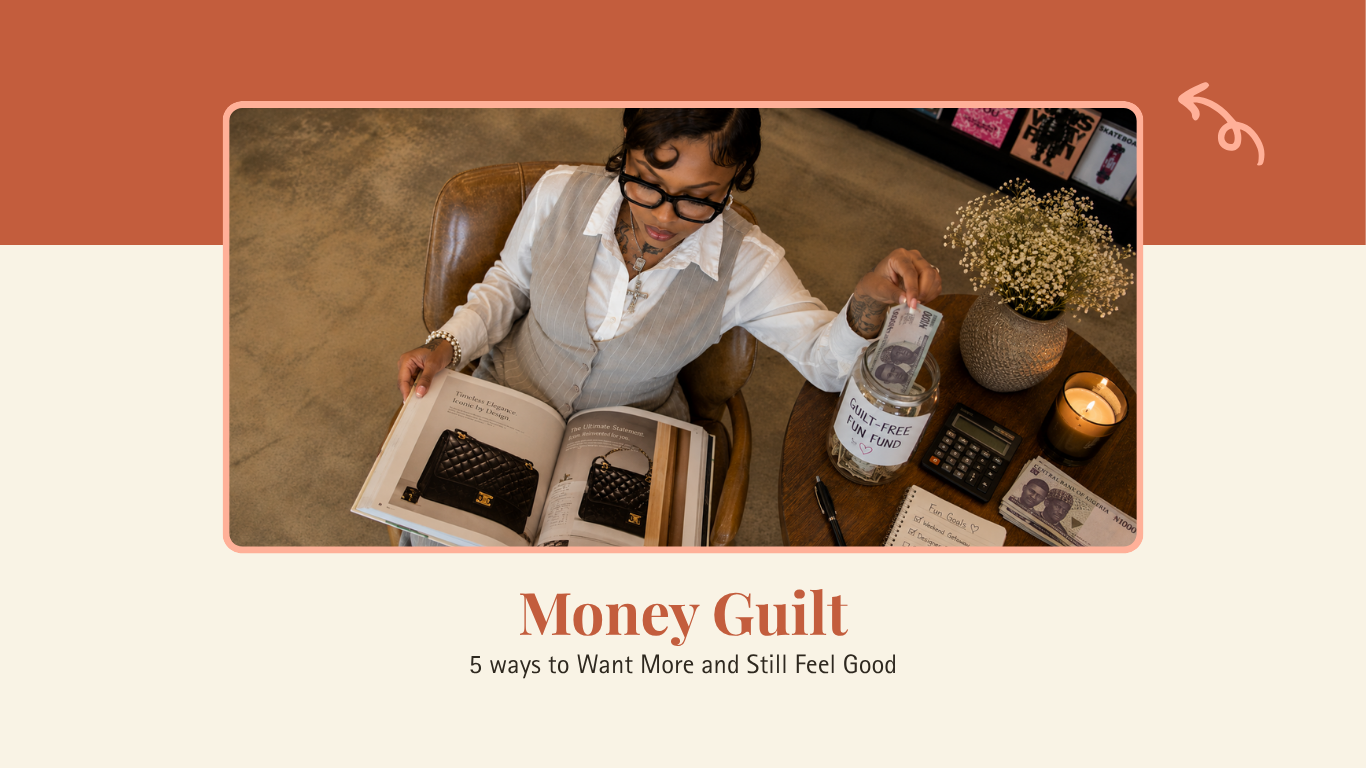
Money guilt is the uncomfortable feeling that makes you second-guess your financial desires, making you feel that wanting more income, charging higher rates, investing boldly, or even spending on yourself is somehow wrong. It’s the belief that ambition needs to be justified.
In 2026, this money guilt is more common than we’d like to admit. Many capable, hardworking women are not held back by a lack of opportunity but by guilt from early conditioning, cultural expectations, or deeply ingrained scarcity beliefs. It’s time to understand money guilt, where it comes from, and how to overcome it so you can build wealth while still feeling aligned, fulfilled, confident, and happy.
What is Money Guilt?

The Emotional Layer Of Financial Decisions
A lot of financial advice usually focuses on numbers like how to budget, save, and invest. In reality, money decisions are more emotional than logical.
Money guilt finds expression in subtle ways, like:
- Feeling uncomfortable because you’re earning more than your peers
- Downplaying your financial achievements
- Hesitating to invest in yourself
- Feeling guilty when you spend money, even when you can afford it.
At its core, it’s the belief that wanting wealth makes you too ambitious, too materialistic, or even selfish. This is why many women struggle with the question: “How much is too much?”
Cultural and Gender Conditioning
A lot of women are groomed from a very young age to believe that being ambitious or aspiring for financial independence is wrong for a woman. They are made to believe that women ought to be humble, agreeable, and not too money-conscious.
Since women are groomed with this kind of mindset, it is no wonder that women shy away from money talks. Conversations around money usually feel heavy, like walking on eggshells. This births hesitation to negotiate salary to avoid being seen as “difficult” or feeling guilty spending on yourself, but not when spending on others.
This is why the women and wealth mindset conversation is so important. It’s time to begin to unlearn the idea that being kind and being financially successful are opposites. Why choose when you can actually be both?
Scarcity Mindset vs Growth Mindset
The way you think about money often shapes your financial reality and attitude towards money. This thinking about money can best be described as “money scripts.” Money scripts usually determine how far you can go financially.
A scarcity mindset is usually shaped by fear or past experiences. So, even when things are going well for you, your fear holds you back a lot. For instance, instead of investing, you’re scared of losing money. So instead of growing, you’re stuck in your comfort zone.
On the other hand, a growth mindset doesn’t ignore risks; rather, it doesn’t allow fear or negative money scripts to influence money decisions.
In simpler terms, the scarcity mindset focuses on protecting what you already have, while the growth mindset focuses on expanding what’s possible. Understanding this makes a whole lot of difference when you start thinking about what the difference is between rich and wealthy.
Where Money Guilt Comes From
1. Childhood Money Beliefs
According to Seattle-based money coach Mikelann Valterra, money scripts “run on autopilot in the background, and people are mostly not aware of them.”
So, it’s possible your childhood money trauma or conditioning is still affecting you today without you realizing it. Those early childhood experiences could be the underlying factor for your money habits.
So sometimes, your reactions to money aren’t just about your current situation but about what you saw and learned growing up.
2. Intergenerational Financial Trauma
Your behavior towards money didn’t just start with you. They’re sometimes influenced by your family’s experiences. So, for some women, money guilt was inherited.
For example, you may have learned to
- Save excessively because of fear
- Avoid taking financial risks
- Feel guilty whenever you spend money
Though these habits may have been helpful for survival in the past, they may be holding you back now. If this sounds like you, the good news is that these intergenerational money habits holding you back can actually be unlearned with awareness and intentionality.
3. Social Comparison and Visibility
As your income grows, your visibility also grows. When you’re in the public eye, you now worry about how other people see you. Studies show that people often adjust their behavior to avoid social judgment, even when it limits growth.
This explains why many women struggle silently with money guilt even when they’re succeeding. Hence, even when you’re doing well, part of you feels uncomfortable about it. Not because you don’t deserve it or want the success, but because you’re trying to conform to societal standards and expectations to be accepted while growing at the same time.
This tension and dilemma can make success feel like a burden that it is really not.
So instead of fully stepping into success, most women tend to downplay how much they earn, avoid talking about money, and delay opportunities that could increase their income.
5 Ways To Want More And Still Feel Good
1. Separate Desire From Morality
Frankly, the fact that you want more money and financial freedom doesn’t make you a bad or greedy person. In fact, financial ambition is often linked to independence and improved well-being.
Define why you desire more money and how it can improve your life. Doing this can make your money guilt disappear.
2. Redefine Wealth as Stability, Not Excess
Most women mistakenly associate wealth with extravagance. In reality, being wealthy means having options, security, and peace of mind.
When you begin to see money as a tool for stability and not a status, it becomes easier to deal with money guilt. If you want to know the difference between rich and wealthy, you need to understand this way of thinking.
3. Align Ambition With Values
Money guilt usually comes from misalignment. When your financial goals feel disconnected from your values, they’ll feel uncomfortable.
Define what “enough” means to you. Is it financial independence? Supporting your family? Freedom to choose your lifestyle?
When your financial goals and aspirations align with your values, it relieves the feeling of guilt and helps you build wealth with clarity and peace of mind. This is a key part of learning how to build an abundance mindset.
4. Replace Guilt With Responsibility
Your mindset needs to change from seeing more money as an avenue for more spending. Rather, see that more money means more responsibility for yourself and for others. Reframing your mindset this way is more empowering and takes away money guilt.
More money increases your capacity to invest more, give more, support others, create opportunities, and build something bigger.
5. Take Gradual Visibility Risks
Confidence doesn’t come before action; rather, it is built by taking action. You cannot wish away money guilt, nor can you overcome it overnight. Start by taking small, gradual steps.
It’s okay to start small. Raise your rates slightly. Invest consistently. Talk about money more openly. Celebrate your financial wins
If you must master how to spend more on yourself without feeling bad, then start with gradual exposure. The more you normalize it, the less guilt you feel.
Practical Habits To Reduce Money Guilt
1. Track Wins, Not Just Spending
It is common practice to track expenses, but most women also neglect tracking their progress. Start documenting income growth, savings milestones, and investment returns.
If you focus only on tracking your expenses, you’ll constantly feel like you’re always losing money, and this can increase money guilt. Tracking your financial progress and wins reminds you that you’re not doing badly after all.
2. Automate Investments
Sometimes, the hardest part of managing money is thinking too much about it. Now, automating your savings helps you avoid this kind of emotional stress. You can set up automatic monthly investments and automatic savings transfers.
This makes it easier for you to build financial security you can trust because it helps to be consistent without having to overthink or second-guess every step.
3. Normalize Money Conversations
Seeing money as a topic to avoid fuels shame and encourages money guilt. Normalize talking about money; talk about your struggles and wins. You’d realize that a lot of people are also trying to figure out their financial lives, too.
Talking to trusted people about money can help you feel less alone and confused, learn new perspectives, and realise your concerns are normal
You don’t have to share everything. Start with small talks. Discuss your goal. Lessons you’re learning. Celebrate small wins
Staying around conversations like this will help you build a healthier women and wealth mindset, where money becomes something to understand and grow, and not something to hide or be ashamed of.
Building Wealth Without Shame In 2026
Financial Confidence as Emotional Stability
Being confident with money doesn’t mean you should know everything. It simply entails trusting yourself enough to make good decisions and continually learn as you grow financially.
Every time you make good money moves like saving consistently, making wise investments, or spending wisely, it boosts your confidence and makes you feel more in control of your finances. As your confidence grows, it gives you more clarity, and money guilt also decreases.
Healthy Ambition vs Greed
Ambition becomes harmful only when it’s disconnected from values. Healthy ambition is when you want more money for the right reasons.
With healthy ambition, you want to create value and support others sustainably. Greed, on the other hand, is fueled by fear, excess, and the constant need to impress. Wanting more is not bad when it has value and meaning attached to it. Understanding this helps you pursue wealth without shame.
Long-Term Security Requires Permission to Grow
You cannot build long-term wealth while you’re limiting yourself. If you must build sustainable wealth, then be honest with yourself about what you want
If you’re serious about financial growth, then explore complete personal finance guide for women and also learn how to spend money wisely without guilt. Because wealth isn’t just built with strategy; it’s influenced by how you feel while building it.
Conclusion: Say Bye To Money Guilt
Money guilt is more common than you think, but it doesn’t have to define your financial life. Know that wanting more is the desire for growth. It’s not an indication of greed or wantonness
What you need us to align with your ambition is your values. Give meaning to your ambition; let it be tied to responsibility. That way, it won’t be plagued with guilt or pressure.
In 2026, financial success beyond how much you earn is also about how you feel while earning it. So instead of shrinking your desires, learn to hold them with confidence.
You really don’t have to choose between wanting more and feeling good when you can have both.

Staff writer at Women Digest covering beauty, fashion, wellness and life.