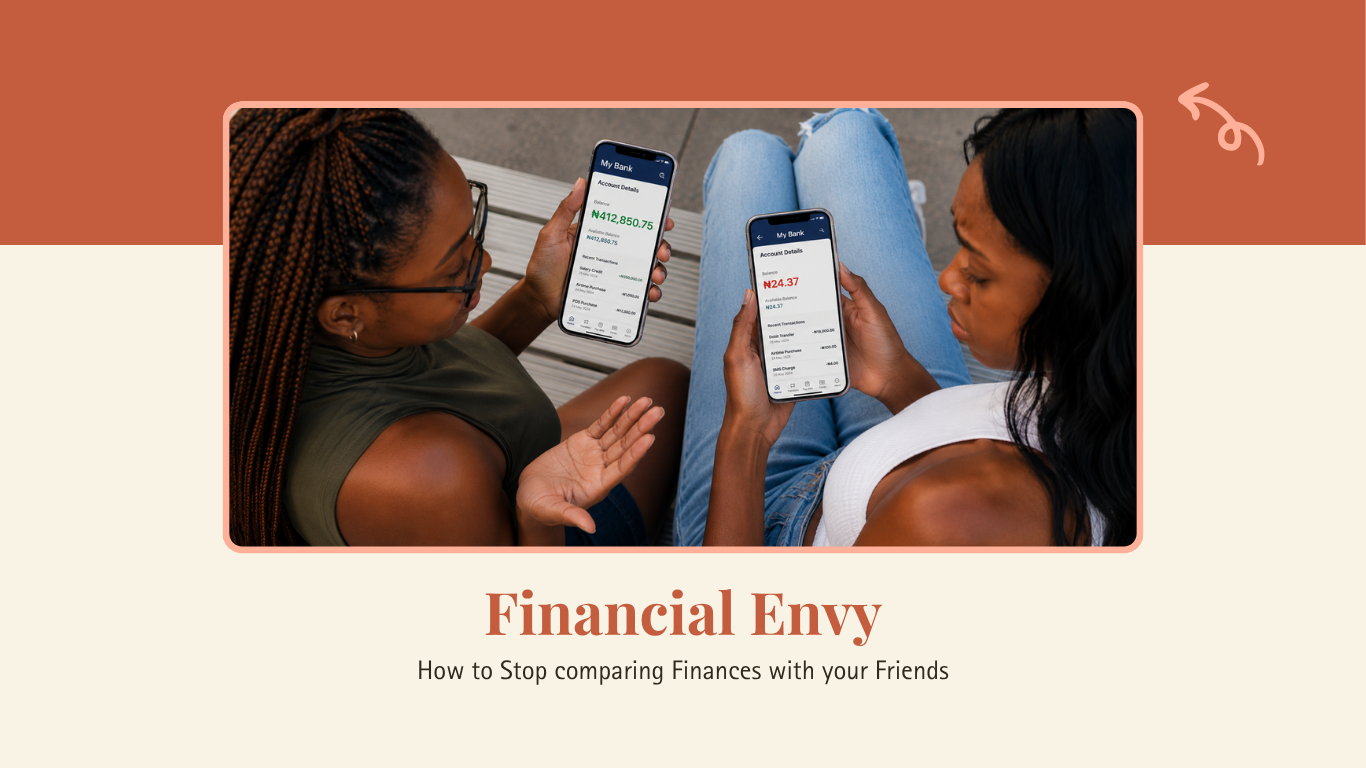
You’re scrolling through Instagram and seeing your mate’s photos from her Maldives holiday. Your colleague just bought a flat in a lovely part of town. Your friend is talking about her promotion and new salary. And suddenly, you feel it, that uncomfortable twist in your stomach that makes you question your money situation.
Financial envy happens when you compare your income, lifestyle, savings, or investments with friends and feel like you’re falling behind. In 2026, this feeling has become common because social media lifestyles make other people’s spending impossible to ignore. The problem is that these comparisons rarely reflect the full financial picture. What looks like success may involve debt, family help you don’t know about, or entirely different priorities.
However, in this article, you’ll learn what financial envy really is, why and how it happens, and how to stop comparing finances with friends.
The Psychology of Money Comparison
Here’s the uncomfortable truth: humans are comparison machines. We’re literally wired to measure our progress against other people. It’s how our ancestors determined whether they were doing well in their tribe, and that instinct remains even though we now live in cities and shop at Tesco.
Money comparison is particularly powerful because wealth is visible in ways that other achievements aren’t. You can see someone’s new car, their holiday photos, their house, and their clothes. You can’t see their pension contributions or their emergency fund, but you definitely notice the stuff.
This social comparison isn’t always bad. Sometimes seeing what’s possible for others can motivate you to pursue your own goals. But financial envy crosses a line. Instead of inspiration, you feel inadequacy. Instead of curiosity, you feel shame. Instead of concentrating on your own progress, you find yourself trapped in a cycle of feeling inadequate.
The tricky bit is that money is tied to survival in a very real way, so comparing finances triggers deeper fears than, say, comparing who has nicer curtains. When you see friends doing better financially, your brain doesn’t just think, “Oh, that’s nice for them.” It thinks, “Am I going to be okay?” Even when you logically know you’re fine, the anxiety creeps in.
The Difference Between Motivation and Envy
There’s a world of difference between healthy inspiration and harmful comparison, and it’s worth knowing which one you’re experiencing.
Healthy inspiration feels like a possibility. You see a friend who’s saved for a house deposit and think, “If she can do it, maybe I can too.” You feel curious about how she managed it. You might even ask her for tips.
Financial envy, on the other hand, feels personal and painful. You see that same friend’s house deposit and immediately think about everything you’ve done wrong. You feel behind, foolish, or like a failure. Instead of asking questions, you avoid the topic entirely or make excuses. The emotion is shame mixed with resentment.
The key difference is where your focus lands. Motivation turns your attention toward action you can take. Envy keeps your attention stuck on the gap between you and someone else, a gap you’re probably imagining is much bigger than it actually is.
Why Financial Envy Feels So Personal

Money isn’t just money. For many of us, our sense of identity, worth, and status in the world intertwines with money.
When you were growing up, you absorbed thousands of messages about what money means. Maybe you learned that financial success equals intelligence or hard work. Maybe you picked up the idea that certain purchases signal that you’ve made it. These beliefs sit in the background, quietly influencing how you feel when you compare yourself to others.
So when a friend seems to be doing better financially, it doesn’t just feel like they have more money. It feels like they’re smarter, more capable, more deserving, or more successful as a human being. And by extension, you must be less of all those things.
This is why financial envy cuts so deep. You’re not just comparing bank balances; you’re comparing your entire worth as a person. Which is, frankly, exhausting and completely unfair to yourself.
You Don’t See the Full Financial Picture
Here’s what you need to remember: you’re comparing your private reality to everyone else’s public highlight reel, and those two things are never going to match up.
When your friend posts about her amazing holiday, you don’t see the credit card debt she’s carrying to pay for it. When your colleague buys a flat, you don’t know that her parents gave her £30,000 for the deposit. When someone’s always dressed beautifully, you don’t see that she’s got nothing in savings and lives with constant money anxiety.
I’m not saying this to be cynical or to assume everyone’s secretly struggling. Some people genuinely are doing well financially. However, the key takeaway is that you never have a complete understanding of the situation. You see the outcome, the holiday, the house, the lifestyle, but you don’t see the debt, the family money, the sacrifices, the luck, or the different priorities that made that outcome possible.
Even when you think you know someone’s situation, you probably don’t. People rarely talk honestly about money. They don’t mention the inheritance, the help from family, the debt they’re managing, or the financial stress they’re under. They just show you the positive bits.
Comparing your finances to this incomplete, carefully curated version of other people’s lives is like comparing your rough draft to someone else’s published book. It’s not a fair or useful comparison.
Different Life Timelines
Not everyone’s life moves at the same pace, and that’s completely normal, even though it doesn’t always feel that way.
Maybe you took time out to travel in your twenties while your friend went straight into a high-paying career. Perhaps you’re currently transitioning careers, while someone else has been steadily advancing in the same field for the past ten years. Maybe you have kids and pay nursery fees, while your friends are child-free and spend money on nice dinners and weekends away.
These aren’t better or worse choices. They’re just different paths with different financial timelines attached to them.
Your friend who bought a flat at 27 might seem ahead, but maybe she moved back home after uni and saved aggressively while you were building independence and life experience in expensive flat shares. She’s not more successful; she just prioritized different things at different times.
Someone who seems flush with cash now might have spent her early twenties broke while studying for professional qualifications that are only just starting to pay off. You can’t compare your chapter three to someone else’s chapter seven and expect it to make sense.
Life doesn’t follow one timeline anymore. Our parents’ generation might have had a clearer path: school, job, marriage, house, kids, and retirement, but that’s not how most of our lives look now. And that’s okay. Different doesn’t mean wrong.
Social Media Amplifies Perceived Wealth
Let’s talk about Instagram, TikTok, and Facebook for a minute, because they’ve turbocharged social media money pressure in ways that previous generations never had to deal with.
Social media shows you a constant stream of other people’s best moments and biggest purchases. New cars, designer handbags, restaurant meals, holidays, home renovations, engagement rings. It’s all there, all the time, creating this impression that everyone except you is living their best, most financially abundant life.
But social media is a lying machine when it comes to money. People post what they want you to see, not their actual financial reality. That influencer with the designer wardrobe might be drowning in debt. That friend who’s always on holiday might be living paycheck to paycheck with zero savings. You genuinely don’t know.
And here’s the really insidious bit: algorithms show you content that triggers emotion, including envy. So you end up seeing more of exactly the kind of posts that make you feel bad about your own financial situation. It’s not an accident. It’s designed to keep you scrolling.
Social media spending pressure is real and relentless. You see something beautiful or expensive, and suddenly, what you have doesn’t feel like enough anymore. It’s hard to be happy with your income when you’re constantly seeing curated evidence that everyone else has more.
How to Stop Comparing Finances With Friends

1. Define Your Own Financial Timeline
If you want to know how to stop comparing finances with friends, this is where it starts: you need to get clear on what you actually want, not what you think you should want based on what everyone else is doing.
What does financial success look like for you? Not for your parents, not for your friends, and not for some imaginary perfect version of yourself, but for you, right now, with your actual life and values.
Maybe it’s having six months of expenses saved so you can sleep soundly at night. Maybe it’s being able to work part-time and have more freedom. Maybe it’s owning a home, or maybe it’s having the flexibility to move cities without being tied to a mortgage. Maybe it’s taking one good holiday a year, or maybe it’s building wealth so you can retire early.
There’s no right answer, but there is your answer, and it probably looks different from your friends’ answers.
Once you’ve defined what you’re actually working toward, you can stop measuring yourself against arbitrary benchmarks like “own property by 30” or “earn six figures by 35.” Those might not even be your goals. You’ve just absorbed them from the culture around you.
Your financial timeline belongs to you. It can speed up, slow down, or take a completely different route than you expected. The only person you need to keep pace with is yourself.
2. Focus on Financial Behaviors, Not Appearances
What you see when you compare finances with friends is almost always the surface stuff, the things they own, the places they go, the life they seem to be living.
What you don’t see is the financial behaviors underneath. And that’s actually where security gets built.
Someone might drive a fancy car and live in a nice flat but have no emergency fund and a mountain of debt. Someone else might seem to live modestly but be quietly investing 20% of their income and building serious long-term wealth.
The behaviors that matter for financial security aren’t flashy or Instagram-worthy. They’re boring things like:
- Spending less than you earn
- Building an emergency fund
- Contributing to a pension
- Avoiding high-interest debt
- Having clear financial goals
- Making intentional choices with your money
You can’t see any of that from the outside. But those are the things that actually determine whether someone is financially stable or just looks like they are.
When you catch yourself comparing, try to redirect your focus back to your own behaviors. Are you saving regularly? Are you making progress on your goals? Are you being intentional with your spending? Those questions matter infinitely more than whether your sofa is as nice as your friend’s.
3. Limit Financial Comparison Triggers
Sometimes the kindest thing you can do for yourself is to reduce your exposure to the things that make you feel rubbish about money.
If scrolling through Instagram makes you feel inadequate about your finances, mute the accounts that trigger that feeling. You don’t have to unfollow anyone or make a dramatic statement, just quietly reduce what you’re seeing.
If certain friends only ever talk about money in ways that leave you feeling behind, it’s okay to gently steer conversations elsewhere or spend a bit less time in those dynamics.
If you find yourself on property websites looking at houses you can’t afford or shopping apps browsing things you don’t need, notice that pattern and interrupt it. These aren’t harmless activities if they’re feeding financial envy and making you miserable.
You’re not being oversensitive or weak by protecting yourself from comparison triggers. You’re being smart. You can’t always control how you feel, but you can control what you expose yourself to.
And here’s the thing: when you reduce those triggers, you often find that the anxiety and envy naturally decrease too. Turns out that when you’re not constantly confronted with evidence that everyone else is doing better than you, you feel a lot more content with what you’ve got.
4. Track Your Own Progress
One of the best ways to stop comparing finances with friends is to start comparing yourself to yourself.
Where were you financially a year ago? Two years ago? Five years ago? Chances are, you’ve made progress even if it doesn’t feel like it when you’re looking sideways at everyone else. Maybe you’ve paid off debt, or built up some savings, or started investing, or increased your income. Maybe you’ve developed better financial habits or gotten clearer on your priorities. Maybe you’ve just survived some difficult circumstances and kept yourself afloat, which is genuinely an achievement.
Tracking your own progress reminds you that you’re moving forward, even if you’re not moving at the same speed as someone else. It shifts your focus from an imaginary competition to your actual financial journey.
You could keep a simple spreadsheet with your net worth each quarter. You could take note of financial milestones as you hit them, first £1,000 saved, first £5,000, first £10,000. You could review your goals every few months and celebrate the ones you’ve achieved.
The progress doesn’t have to be dramatic to count. Small, consistent movement in the right direction is how wealth actually gets built, even though it’s not as exciting as the big flashy wins you see on social media.
5. Build Financial Conversations Based on Honesty
Money silence breeds money comparison. When nobody talks honestly about their finances, everyone’s left guessing and assuming, and usually assuming the worst about their own situations.
If you’ve got friends you trust, try opening up about money in real ways. Not to compete or prove anything, but to actually share what’s happening.
Talk about the financial decisions you’re struggling with. Share what you’re working toward. Ask questions about how others are managing things. Be honest about your challenges as well as your wins.
You might be surprised to find that your friends are dealing with similar worries, doubts, and setbacks. That person who seems to have it all together financially might be stressed about money, too. That friend whose life looks perfect might have her own version of financial envy when she looks at someone else.
Honest conversations take the power out of comparison. When you know the real story, including the hard bits, it’s much easier to support each other rather than silently competing.
And if you’ve got friends who only want to boast or compare or make you feel small, maybe they’re not the right people to have money conversations with. That’s okay too. You get to choose who you’re vulnerable with.
6. Set Clear Financial Goals
Vague financial anxiety is so much worse than specific financial challenges. When you don’t have clear goals, it’s easy to feel like you’re failing at everything all at once.
But when you set actual goals, short-term and long-term, you give yourself something concrete to work toward that has nothing to do with what anyone else is doing.
Short-term goals might look like:
- Save £1,000 for an emergency fund
- Pay off a specific credit card
- Reduce spending on takeaways by £100 a month
- Start contributing to your pension
Long-term goals might be:
- Buy a home
- Build six months of expenses in savings
- Be debt-free
- Achieve a certain level of retirement savings
When you’ve got your own goals, you’ve got your own measuring stick. You’re not wondering if you’re doing okay compared to your friends, you know if you’re doing okay based on whether you’re making progress on the things that matter to you.
This doesn’t mean you’ll never feel financial envy again. But it does mean you’ve got something real and personal to refocus on when that feeling shows up.
7. Celebrate Personal Financial Wins

We’re terrible at acknowledging our own financial progress. We hit a savings milestone and immediately think, “Yeah, but I should have done this years ago,” or “It’s not that much compared to what other people have.” Stop that. Seriously.
Every step forward deserves recognition, even the small ones. Especially the small ones, actually, because that’s what most of the financial progress is made of. Paid off a credit card? That’s brilliant. Saved your first £500? Amazing. Went a whole month without an overdraft? Genuinely worth celebrating. These things matter.
Celebrating your wins isn’t about being smug or comparing yourself favorably to others. It’s about training your brain to notice progress and feel good about it. That positive reinforcement makes it easier to keep going.
And honestly, if you can’t feel good about your own financial achievements without immediately qualifying them or diminishing them, you’re always going to feel behind. There’ll always be someone with more, someone who did it faster, someone who seems more successful.
Your wins are yours. Let yourself feel good about them.
8. Shift From Competition to Stability
Here’s a question worth sitting with: what are you actually trying to achieve with money?
If your honest answer is “to have more than my friends” or “to look successful,” you’re setting yourself up for a lifetime of financial envy and dissatisfaction. There’ll always be someone with more. Always.
But if your goal is financial stability, the ability to handle unexpected expenses, to make choices based on what you actually want rather than what you can afford, to feel secure and sleep well at night, that’s something you can actually build.
Stability looks different from the outside than status does. Stability might mean driving an older car so you can save six months of expenses. It might mean living in a smaller flat, so you’re not stretched thin on rent. It might mean saying no to expensive social events so you can invest in the future.
These choices won’t impress anyone on Instagram. But they’ll give you something much more valuable: peace of mind. When you focus on building security rather than keeping up appearances, financial comparison loses its power. You’re not trying to match anyone anymore. You’re trying to build a life that feels solid and sustainable for you.
9. Wealth Looks Different for Everyone
We’ve got this narrow cultural definition of what financial success looks like, the house, the car, the holidays, the stuff, but that’s not the only way to be wealthy.
Maybe wealth for you is having enough passive income to work less. Maybe it’s having the freedom to take career risks because you’ve got savings to fall back on. Maybe it’s being debt-free and not owing anyone anything. Maybe it’s being able to help your family when they need it.
Maybe wealth isn’t even primarily about money. Maybe it’s about time, or relationships, or health, or purpose, with financial stability as the foundation that makes those things possible.
The point is, you get to define what wealth means to you. And when you do that, you stop measuring yourself against other people’s definitions and start building toward your own.
Someone else’s version of success might look absolutely miserable to you if you’re honest. The high-stress job that pays well but eats up all your time. The impressive house comes with a massive mortgage and constant financial anxiety. The lifestyle that looks great but requires spending every penny with nothing left over for security.
You’re allowed to want something different. You’re allowed to think someone else’s choices wouldn’t work for you. You’re allowed to build wealth in ways that don’t look conventional or impressive from the outside.
10. Replace Comparison With Curiosity
When you catch yourself comparing finances with friends, try swapping judgment for curiosity.
Instead of “she can afford that and I can’t, what’s wrong with me?” try “I wonder how she makes that work financially” or “I wonder what her priorities are that led to that choice.”
Instead of assuming you know someone’s financial situation based on what you can see, get curious about the story behind it. Maybe ask genuine questions if you’re close enough. Most people actually appreciate the chance to talk honestly about money when it’s coming from a place of real curiosity rather than judgment or competition.
Curiosity opens doors. It lets you learn from other people’s financial experiences without feeling diminished by them. It turns money from a source of comparison and anxiety into something you can actually have interesting conversations about.
And sometimes curiosity reveals that the thing you were envying isn’t even something you’d want if you knew the full story. That “amazing” lifestyle comes with trade-offs you wouldn’t be willing to make. That career success requires sacrifices you’re not interested in.
Learning rather than judging takes the emotional charge out of financial comparison. You’re gathering information, not measuring your worth.
11. Long-Term Wealth Requires Patience
Here’s the thing nobody tells you when you’re busy comparing yourself to everyone: building real financial security is slow, boring, and mostly invisible.
You don’t see someone’s wealth accumulating month by month in their pension. You don’t see the compound interest building in their investment account. You don’t see the years of consistent saving and investing that happened before they bought that house. You just see the outcome and assume it happened easily or quickly, or that they must be earning tons more than you.
Real wealth, the kind that provides genuine security and freedom, is built through consistent, patient, unglamorous behaviors over years and decades. It’s the opposite of what you see on social media. And the pace varies wildly based on starting point, income, family support, luck, and a million other factors, most of which aren’t in your control.
Final Thoughts
Financial journeys rarely happen at the same pace, and that’s frustrating when you’re trying to measure your progress against others. But it’s also kind of liberating. You can’t rush time. You can’t force wealth to build faster than it builds. You can only focus on the behaviors that matter and trust that consistency compounds.
The friend who seems miles ahead might have had a ten-year head start. Or family money. Or just different circumstances. That doesn’t make your progress less real or less valuable. It just means you’re running different races.
By focusing on your own goals, tracking your personal progress, limiting comparison triggers, and building honest conversations about money, you can develop genuine financial confidence that isn’t dependent on how you measure up to anyone else. Your financial journey is yours.
FAQs
What is financial envy?
Financial envy is the feeling of inadequacy, anxiety, or resentment that comes from comparing your financial situation to others and believing you’re falling behind. It often triggers shame and can affect your spending habits and overall well-being.
Why do people compare their finances with friends?
Humans naturally measure progress socially, and money is highly visible through purchases, lifestyles, and social media. Financial comparison feels especially personal because wealth is tied to survival, identity, and cultural ideas about success.
Is financial comparison harmful?
When it shifts from healthy inspiration to envy, yes. Financial comparison can trigger anxiety, shame, and poor spending decisions. It’s harmful when it makes you feel inadequate or pushes you to spend money trying to keep up with others.
How can I stop feeling behind financially?
Focus on your own progress rather than others’. Track where you were financially a year ago, set personal goals, and remember that everyone’s timeline is different. Limit social media exposure and have honest money conversations with trusted friends.
Can financial envy affect spending habits?
Absolutely. Financial envy often leads to spending money to keep up appearances or match friends’ lifestyles, even when it doesn’t align with your actual goals or budget. This can create debt and prevent you from building real financial security.

Staff writer at Women Digest covering beauty, fashion, wellness and life.