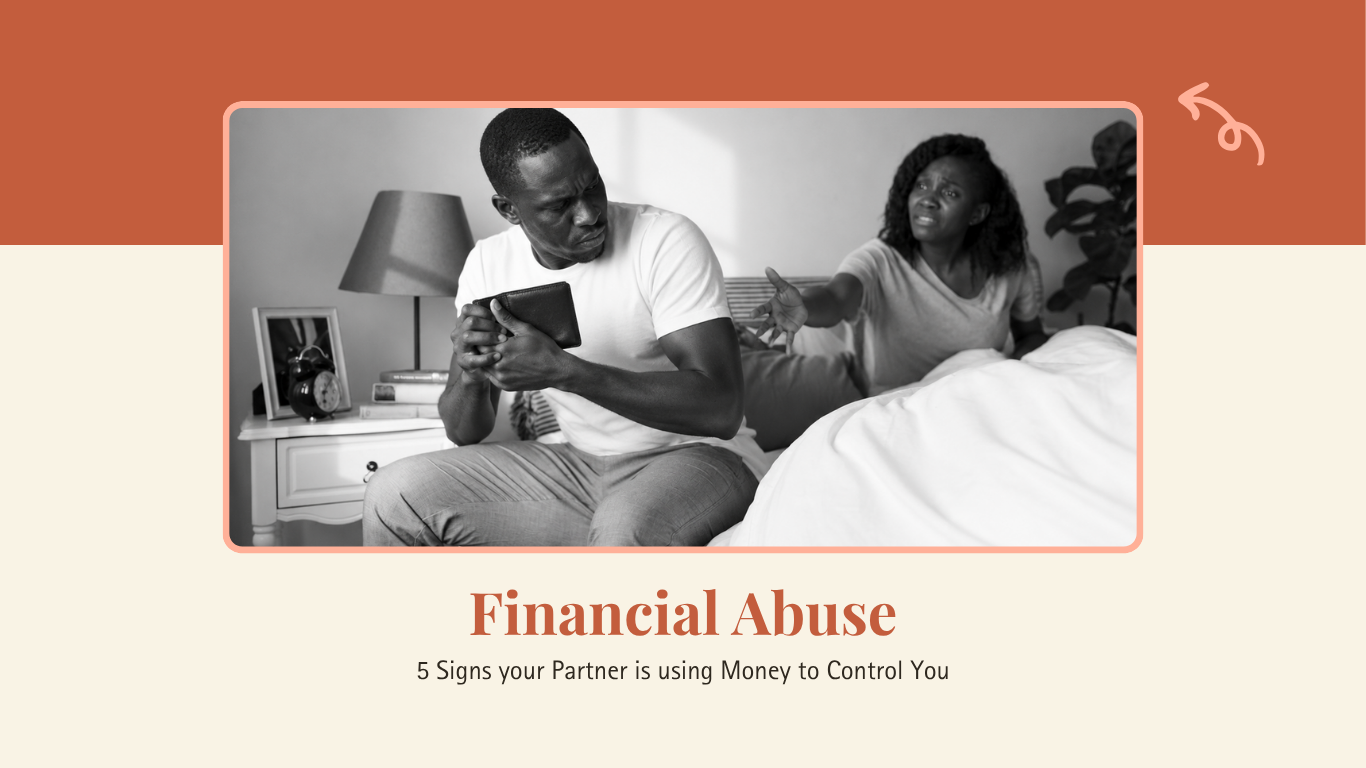
Financial abuse happens when a partner uses money as a tool to control, manipulate, or limit your independence. Sadly, it’s more common (and more subtle) than many people realize.
In 2026, financial abuse doesn’t always look like outright denial of money. It can show up as constant scrutiny over your spending, pressure to quit your job, or being kept in the dark about shared finances. Over time, these patterns can rob you of your confidence, limit your choices, and trap you in a situation that feels increasingly hard to leave.
What Financial Abuse Really Is And The Different Forms of It
Financial abuse is really all about control. It is control disguised as financial management and accountability.
A healthy relationship is characterized by transparency, respect, and freedom in handling money matters. In contrast, financial abuse occurs when one partner dominates financial decisions in such a way that it limits the other person’s freedom.
This can happen by:
- Direct control of money (e.g., managing all accounts without transparency)
- Restricting access to funds
- Forcing financial dependence
- Blocking opportunities to earn or grow financially
This can be referred to as economic abuse or money control in relationships. It can exist even in relationships that appear stable from the outside because it doesn’t always look aggressive. It starts as “caring” or “responsible.”
The Psychological Impact (What It Does To You Internally).
The effects of financial abuse go all the way to one’s self-image.
Women who are financially abused in relationships often experience the following:
- Constant anxiety about spending
- Fear of asking for money
- Loss of confidence in decision-making
- Feeling “stuck” or dependent
Over time, these experiences rid the woman of her autonomy. She’d start to doubt her judgment or feel incapable of managing her finances, even when that’s clearly not true.
Difference From Normal Financial Conflict
We all have different habits and orientations regarding money, so it’s very common to have money disagreements in relationships. But money conflicts are very different from financial abuse.
In healthy financial conflict, both partners have a voice. Decisions are discussed, not dictated. Disagreements are occasional, and there’s mutual respect even in the presence of disagreement.
However, in financial abuse, the patterns are different. One person controls the other partner’s choice. There is a lack of transparency and the presence of manipulation, fear, intimidation, pressure, and guilt.
If you constantly feel like you’re being monitored, restricted, or powerless, then it’s a clear indication of financial abuse.
Why Financial Abuse Happens
1. Power Imbalance in Relationships
Most relationships plagued with financial abuse have one partner with financial power, the one who controls the money and also the relationship. More simply, at the heart of financial abuse is power.
A controlling partner usually uses money to:
- Maintain dominance
- Limit your independence
- Ensure you rely on them
Money becomes leverage. Instead of a partnership, the relationship becomes one of dependency (where one person relies on the other, not just emotionally, but financially).
2. Societal and Cultural Factors
Sometimes societal norms and expectations act as enablers to financial abuse. This plays out in some societies, including parts of the UK, where traditional gender roles reinforce dependency.
For example, expecting men to “handle finances,” viewing women’s income as secondary, and normalizing financial secrecy.
These patterns can make spotting financial red flags in relationships more difficult, especially because they’re seen as “normal” according to societal standards.
3. Lack of Financial Literacy or Awareness
Sometimes, financial abuse doesn’t start as control but grows from a knowledge gap. This is why the need for financial literacy cannot be overemphasized. A complete personal finance guide for women is not only for knowledge but is also empowering.
If you’re not knowledgeable about budgeting, credit, or investments, it becomes easier for someone with bad intent to leverage that and take over. This is why knowing how to spot financial vulnerability is a critical step toward protection.
5 Signs Your Partner Is Using Money To Control You

Being able to recognize the signs of financial abuse is the first step towards freedom.
1. Restricted Access to Bank Accounts
One way to identify financial red flags in relationships is to see if your partner insists on managing all finances while restricting your access.
For example, you do not know how much money is in shared accounts. You are denied access to your bank cards and statements. You need permission before you can use money.
Transparency is key in healthy relationships. So, even if one person is managing the finances, both partners still have full visibility and access. Being shut out is a major red flag because it fosters dependency.
2. Monitoring or Limiting Spending
This is a situation where you’re being questioned over small expenses, being given an “allowance,” and you’re feeling guilty for spending even your own money.
This form of money control in relationships usually starts in a subtle manner but becomes more restrictive over time.
3. Preventing You From Working or Earning
One of the major forms of economic abuse is limiting your ability to earn.
It can come in different forms, like discouraging or forbidding you from working (“You don’t have to work; I’ll take care of everything” or “Your job is affecting the relationship”)
They could also sabotage your job opportunities, or make it hard for you to keep a job (e.g., withholding childcare support)
Stripping a partner of every means of earning creates financial dependency and encourages financial abuse.
4. Withholding Financial Information
Transparency is key in any partnership. So you need to be wary of a partner that keeps information from you or makes money decisions without involving you.
If your partner hides debts, income, investments, or bills, it creates an imbalance of power and puts you in a vulnerable position. This is one of the most overlooked signs of financial abuse.
5. Guilt-Tripping Around Money
This is where emotions are used to control your financial behavior. You hear things like the following: “After everything I do for you…” “You’re too irresponsible to handle money.” “You should be grateful.” “You’re too careless with money.”
Over time, self-doubt creeps in, and you begin to believe you’re incapable of handling financial matters, so you completely rely on your partner to manage your money.
How To Protect Your Finances
If you notice any of these patterns in your relationship, there’s no need to panic. There are practical steps you can take to regain your freedom and control.
1. Maintain Personal Accounts and Credit
Even in a committed relationship, you can still have financial independence, something that is your own. Start by opening and keeping a personal bank account. Build your own financial identity and have your own savings. This will give you options and freedom.
2. Track and Document Finances
Be financially knowledgeable. Learn how to track and keep records of your income, expenses, shared financial responsibilities, debts, and investments. Understanding your money makes it harder for anyone to control or mislead you. It helps you stay informed and protects you if situations escalate.
3. Build a Safety Net
See this as your backup plan. A safety net gives you options. Make sure to have an emergency fund (you can do this by saving small amounts consistently over time), stay connected to trusted friends or family, and keep important documents accessible.
Also, learning how to spend money wisely. You’ll be less fearful and more courageous when you have something to fall back on.
4. Seek Professional Advice
Figuring out how to leave an economically abusive partner can be scary and overwhelming. So you don’t have to figure it all out on your own. Consider speaking with financial advisors, legal professionals, a trusted mentor, or a support group.
Regaining Financial Autonomy In 2026
You don’t just regain your financial autonomy by leaving the relationship. Regaining financial stability also involves rebuilding your confidence and independence.
1. Establish Boundaries and Communication
If you’re sure it’s safe to do so, then you start with clear conversations. Define shared vs. personal finances. Be clear about expectations around spending. Ask for transparency around finances. Setting clear boundaries helps move the dynamics from control to partnership.
2. Education and Financial Literacy
The more you know about money, the more confidence you’ll have. Learn more about budgeting basics, saving strategies, and investment fundamentals. Knowledge doesn’t just protect you but also helps in overcoming money guilt and making clear money decisions.
3. Long-Term Planning and Security
Think beyond the present. Focus on sustainability and not just day-to-day. Start working on saving for the future, investments, and having multiple streams of income. These steps ensure that your financial future isn’t dependent on anyone else.
If you’re considering leaving, then understanding how to leave an economically abusive partner safely is crucial because it should always involve planning and support.
Conclusion: Learn to Stop Financial Abuse
Financial abuse is often subtle and easy to dismiss, but its impact is real. It can affect your confidence, your choices, and your long-term security in ways that go far beyond money.
The good news is that awareness changes everything. By recognizing the signs of financial abuse and taking small but consistent steps to protect yourself, you can reclaim your independence and rebuild your confidence.
You deserve a relationship where money is a shared tool and not a weapon. And more importantly, you deserve to feel secure, respected, and in control of every area of your life.

Staff writer at Women Digest covering beauty, fashion, wellness and life.