
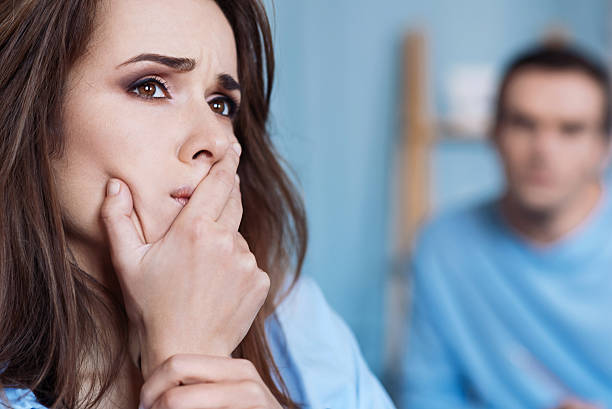
Is my relationship toxic? Why do I have a strong sense of foreboding whenever I think about the future of my relationship? If you’re asking these questions, it’s time to examine your relationship closely and have an honest conversation with yourself.
Most women dismiss any feelings of discomfort in relationships, especially when there are no physical fights or obvious problems. You look at your partner and think, But they’re so nice to everyone else, or We have such a great history. Nonetheless, toxicity isn’t always obvious. You don’t need an elaborate explanation to validate your emotions. If you don’t feel like your true self anymore, that alone is a good reason to investigate further. This article will help manage that confusion with understanding and kindness towards yourself.

Our typical view of toxicity is lots of drama, loud arguments, physical abuse, or blatant betrayal of trust. In reality, what is a toxic relationship is often defined by a consistent pattern of behavior that leaves one person feeling drained, belittled, or unsafe to be their true self.
It is essential to differentiate between an imperfect relationship and a toxic one. All couples experience tension, negative feelings, and conflicts. A healthy but flawed relationship has a foundation of shared respect and a willingness to address the conflict. When you raise an issue, a supportive partner listens, even if they initially react defensively, and tries to reach an agreement. In a toxic relationship, the disagreement is left unresolved; it is used as a form of control or to avoid responsibility.
Toxicity resembles a gradual air loss in a tire; you may not see it right away, but eventually, you realize you can’t continue because you’ve run out entirely. It is a situation in which one individual’s needs continually overpower the other’s.

Image: istockphotos
When situations aren’t dire enough to warrant leaving, such as the absence of physical abuse or blatant infidelity, we often downplay our instincts. We convince ourselves that we are overreacting or that he is simply under pressure from his job. But these subtle toxic relationship signs are often the most telling because they target your identity.
How do you feel when your partner is not around? Do you feel happy or relieved that they are gone? Is it like you can finally breathe again when you hear the front door shut? If their absence makes you feel much better, then the answer to the question “is my relationship toxic?” is definitely yes.
“Walking on eggshells” is a phrase we use to describe this. It means you are living in a state of hypervigilance, constantly scanning your partner’s mood to ensure your own safety or peace. Because you are afraid of their reactions, you learn to anticipate their triggers and solve issues before they arise. Over time, this chronic anxiety makes you feel small, as if you’ve been pushed into a corner of your own life to make room for their oversized moods.
In a good relationship, communication acts as a link. In a harmful one, it becomes a war zone. Sometimes, you notice that every discussion somehow ends with you saying sorry, even when you were the one who got hurt. This pattern is often called DARVO (Deny, Attack, and Reverse Victim and Offender).
You might also notice disregard masked as humor. When you share a painful emotion and someone tells you that you can’t handle a joke or that you’re overreacting, they dismiss your feelings. This subtly signals that your emotions matter less than their comfort. When you stop mentioning certain topics because you anticipate a laugh or a flash of irritation, the closeness in your relationship begins to fade.
One common detrimental trait is unpredictability. They might be the world’s most compassionate and kind person one minute and then turn distant, uncaring, or give you the silent treatment for no apparent reason the next. Intermittent reinforcement is the word used to describe this. It functions similarly to a slot machine; you are ready to put up with hours of losses (the far side) since you occasionally experience a win (the affectionate side of them). This creates a trauma link where you do your best to get back to their positive side. You start to believe that you can always get in touch with that loving person by just acting better.
Understanding specific toxic traits in a relationship helps you move away from self-doubt and toward clarity. These aren’t just personality quirks; they are patterns of behavior that prevent a relationship from being a safe harbor.
This entails turning your empathy against you. A toxic relationship may make you feel bad for leaving them alone or suggest that you don’t care about their needs if you try to create boundaries, such as going out with your friends. It’s a method of avoiding constructive dialogue to prevail in a dispute or keep control of your schedule.
Instead of saying “I’m upset,” a partner might use sarcasm, backhanded compliments, or purposeful forgetting to express their anger. The silent treatment is particularly damaging because it is a form of emotional abandonment. It forces you to beg for their attention back, which shifts the power entirely to them.
This is the constant barrage of telling you that your perception is distorted, your sentiments are incorrect, or your memory is flawed. Things like “I never said that,” “You’re too emotional” or “You’re imagining things” are typical. You eventually lose faith in your own intuition, which is precisely why leaving is so difficult. You start to rely on them to tell you the truth.
It is helpful to compare these patterns against Signs You’re in a Healthy Relationship. If the contrast feels stark, your intuition is likely trying to tell you something important.
If you’re asking, “Is my relationship toxic?” you’re probably confused because the dynamics are inconsistent.
We often believe that someone must always be a villain if they are harmful. We expect them to be cruel, unattractive, and easy to despise.
In reality, people are rarely that polar. When they’re happy, a spouse may be extremely helpful, humorous, and kind, while at other times, they may be deeply contemptuous and manipulative. A person can be a diligent worker or an excellent father and still be emotionally dangerous for you. Those good moments, however, are often what keep many women trapped in harmful cycles for years.
It’s possible to be in love with someone while still being honest enough to recognize that your shared dynamic is unhealthy. You can acknowledge that the relationship is affecting your mental health while also appreciating their strengths. Loving someone doesn’t mean you have to burn yourself to keep them warm.
Long-term exposure to harmful relationships causes your brain to adapt in ways that are intended to protect you but eventually harm you. This is why it’s so important to recognize signs of a toxic relationship early.

Image: istockphotos
If any of this resonates with you, you don’t have to make a life-changing decision this afternoon. Being clear is a process rather than a final goal. You must first simply stop ignoring the signals your body is sending you. This is a helpful strategy for the transitional stage.
When we are caught up in a poisonous cycle, we often forget the negative moments as soon as positive ones happen. This is a way of surviving. You can identify trends by simply recording your daily emotions in a secure app on your phone. Make a note of the occasion, the date, and your feelings. Your own words will be the proof you need to believe in yourself in six months.
Consider your relationship as if you were a scientist watching a documentary for a week. Avoid attempting to resolve the disputes. Avoid attempting to convey your emotions to them. Simply observe. When you give them excellent news, watch how they respond. When you say no, watch how people respond. Observing things from a distance can clear the cloud of feeling.
In seclusion, toxicity flourishes. Consult a therapist or a good friend who isn’t involved. Sometimes you can identify the things you’ve been too scared to say out loud with the assistance of an impartial third person.
It may not be easy to let go of someone you still love, but staying might be costing you too much.
See Also: How to Set Boundaries Without Guilt.
A toxic relationship involves behaviors that cause emotional—and sometimes physical—harm. Instead of offering support, the dynamic creates persistent conflict and leaves you feeling drained rather than energized. Over time, one person’s comfort routinely comes at the expense of the other’s well-being.
Not necessarily. Every relationship experiences unhealthy phases due to stress, grief, or communication breakdowns. The difference lies in patterns: toxic relationships repeat harm and avoid accountability, often through denial or deflection. In healthy relationships, both people want to grow; in toxic ones, one person usually wants to win.
Change is possible, but it is rare and difficult. Both people must acknowledge the toxicity instead of one person trying to fix everything alone. Real change requires long-term therapy and a genuine shift in power dynamics, and even then, deeply ingrained patterns often persist when the dynamic stays the same.
This social observation suggests that relationships hit major checkpoints at three months (the end of the honeymoon phase), six months (when real flaws emerge), and nine months (when long-term compatibility comes into focus). These moments naturally invite reflection on whether the foundation rests on respect or control.
When you feel consistently drained, diminished, or afraid to speak your truth, the relationship likely crosses into toxic territory. Your body often recognizes this before your mind does. Watch for physical signs like tension headaches, dread when they come home, or the quiet disappearance of your old spark.
In dating, the 3-3-3 rule describes three early phases: the first three days (initial spark), three weeks (forming a routine), and three months (revealing true character). This framework helps you notice red flags before you become deeply trauma bonded to the person.
Acknowledging that a relationship is unhealthy is an act of self-preservation rather than betrayal. To determine that you deserve a better kind of life, you don’t need to demonstrate that someone is a narcissist or a nasty person. Even if two individuals get along just great apart, sometimes they are just poisonous together.
Take your time. You don’t have to have all the answers, and you don’t have to go today. But quit telling yourself that it doesn’t matter how you feel. Pay attention to the inner voice that inspired you to read this today. That voice is your agency, and it’s finally beginning to emerge.
Read More: The Modern Relationship Playbook.