

Stepping into a boardroom, a construction site, or an office where you are the only woman can feel like getting on a stage without a script. There’s a kind of pressure that comes with being a woman in a male-dominated industry.
Sometimes you feel as thou the entire reputation of woman lies in your hands and your every move places a label on all women. If you make a mistake, it’s tagged “all women are too emotional.” If you make a bold move, it’s “Oh! Women are just so aggressive.” You were hired because you’re talented. As a woman working in a male-dominated industry, it’s time to stop trying to fit in.

Image: istockphotos
As women, we’re taught from a young age, to be bridge-builders and peacekeepers. In a professional setting, this means being conciliatory and diplomatic, making sure everyone is happy and there is no negative energy. Although these are incredible leadership traits, in a male-dominated workplace, they can be misinterpreted as a lack of authority or confidence.
Shrinking in this context means reducing your contributions to avoid conflict. When you shrink, you not only lose your voice; you also lose your impact.
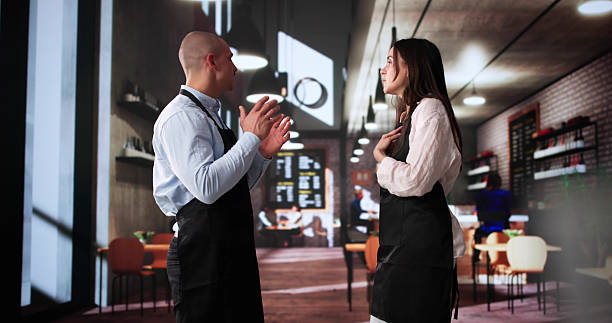
Image: istockphotos
When you’re working in a male-dominated environment, the culture often rewards confidence, sometimes even over competence. While you don’t need to adopt a false persona, you do need to claim your space.
Change your language. Stop saying “I just think” or “Does that make sense?” These are timid phrases meant to make your opinion seem less threatening. In reality, they make you sound unsure.
The “Just” Filter: “I’m just checking in” should be “I am following up on.”
The “Permission” Filter: “Is it okay if I say something?” should be “I have a point to add here.”
The “Sense” Filter: Instead of asking if you made sense, which puts the burden of clarity on you, ask “What are your thoughts on that proposal?”
Body language is a silent conversation. In a male-dominated workplace, men often take up space by leaning back, spreading out their notes, and using the armrests. Women usually do the opposite, crossing their legs and keeping their arms close.
Never choose chairs in the back row when there’s an open seat at the main table.
This simple move shows that you are engaged and confident.
Women often say sorry for things that aren’t mistakes, like when someone bumps into them. Save your apologies for when you actually make a mistake.
Women tend to shrink when they take on “non-promotable tasks.” Although it doesn’t result in a promotion, this is the administrative “glue” that keeps an office operating. Taking minutes of meetings is one example of this. Another is planning the birthday celebrations at work or the holiday party, placing the group’s lunch order, tidying up the shared kitchen.
If you are a female working in a male-dominated industry, being the office mom is a one-way ticket to being overlooked for leadership roles. When you’re asked to do these things, use the Rotation Strategy. Say: “I took notes last time; let’s rotate that duty. Mark, why don’t you take them today?” This establishes that you are a colleague, not an assistant.
Now this is usually the toughest part of the conversation: the money. Pay discrimination at work is a reality that many women face silently. If you suspect unfair pay in the workplace, shrinking is the worst thing you can do. Silence is a cost you cannot afford to pay.
You can’t fix what you can’t prove. If you feel there are unfair wages at work, start by gathering evidence. We’re not talking gossip or hearsay, actual evidence.
When it’s time to talk, avoid bringing up feelings or needs. Employers pay you for the value you create, not because you have a mortgage to pay.
As women, we’ve been made to believe that we either be liked or respected, but rarely both. In a male-dominated industry, this is called the “Double Bind.”
If you’re assertive, you’re difficult, you’re collaborative, you’re weak. And if you’re passionate, you’re emotional. You must stop worrying about being the cool girl if you want to stop shrinking. When she is talked over, the cool girl doesn’t complain. To blend in, the cool girl laughs at the sexist joke. However, because she isn’t viewed as a leader, the cool girl is also passed over for the VP position.
If you are direct, be direct. If you are analytical, be analytical. The most successful women in male-dominated spaces aren’t those who act like men; they are those who are so undeniably good at their jobs that their uniqueness becomes an asset rather than a hurdle.
Being a woman in a male-dominated work environment can be lonely, but you shouldn’t do it in isolation. You need a “Board of Directors” for your career.
You have probably experienced this countless times. You suggest an idea, it’s ignored, and five minutes later, Gbenga suggests the exact same thing and everyone cheers. This is “Hepeating.” Or, you’re mid-sentence and a colleague talks over you.
Here’s how to handle it without shrinking:
One reason women shrink is the fear of being wrong. In a male-dominated workplace, a woman’s mistake is often viewed as a gender failure, whereas a man’s mistake is just shrugged off as a bad day. This leads to Perfection Paralysis.
To thrive, you have to give yourself permission to be B-minus some days, you’ve already come a long way. You have to be willing to take risks that might not pan out. Growth happens when you stretch yourself and you can’t stretch if you’re trying to keep yourself small and safe.

Image: istockphotos
The goal isn’t just for you to survive being a woman in a male-dominated industry, it’s for you to change it by your mere presence. Every time you speak up, every time you address pay disparity, and every time you refuse to do the coffee run, you are creating a new blueprint for the women who will come after you.
You don’t need to be one of the boys, neither do you even need to be a girl boss. You just need to be a professional who knows her worth and refuses to discount it for the comfort of others. The room might be male-dominated for now, but your seat at the table is non-negotiable