
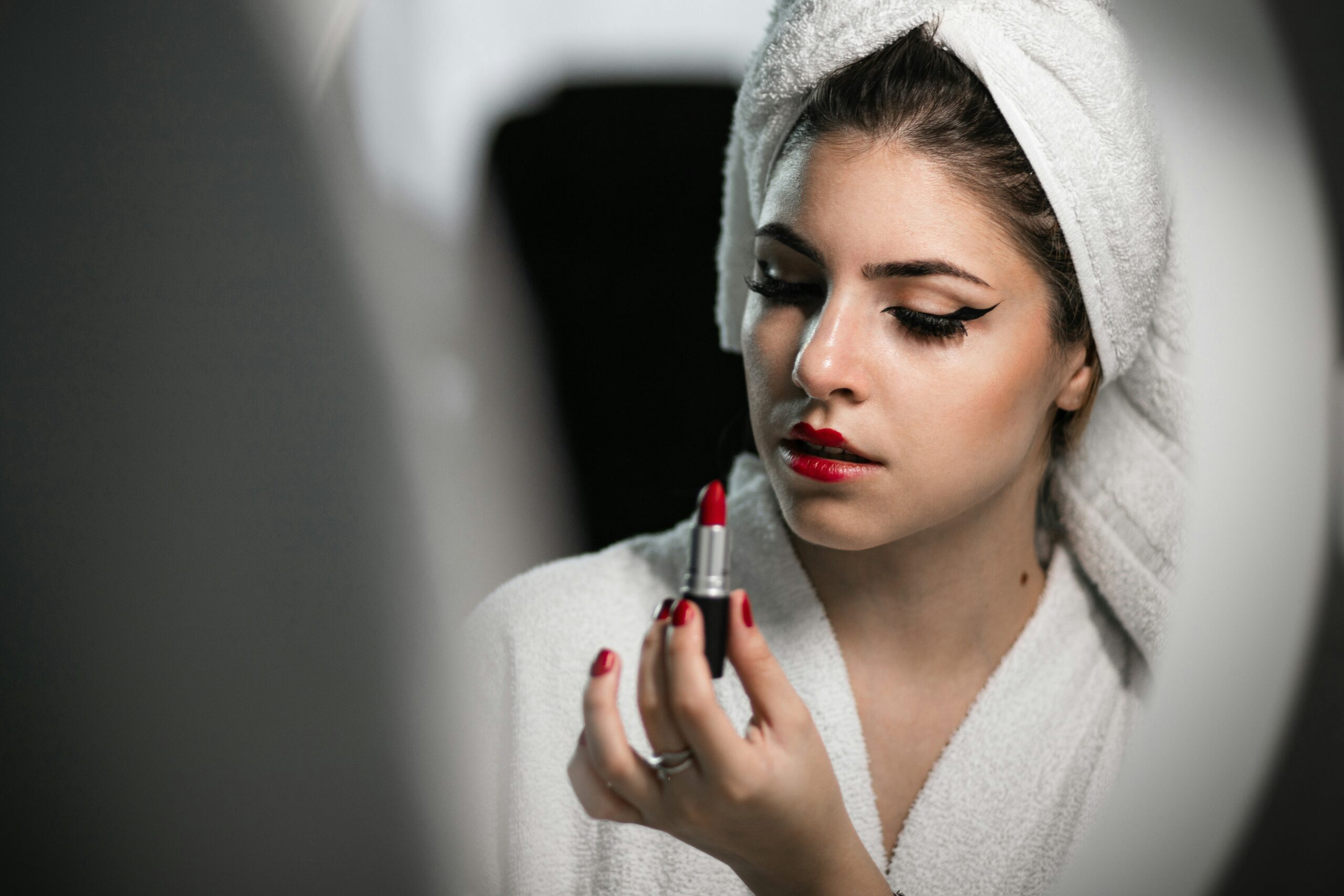
You buy a lovely lipstick from a showcase in your favorite beauty store, only to discover that it looks ashen against your skin tone on your lips. Don’t worry, let me be your guide in this journey to choosing the right lipstick for your skin tone.
The first thing you need to understand is that choosing lipstick for your skin tone is not just about what looks pretty in the store or what’s trending on TikTok. It is about understanding your undertone, your contrast with your natural coloring, and how color plays with light on your face. Once you get the hang of this, you will be buying lipsticks less, wearing them more, and never leaving the house feeling insecure about your pout again.
Alright, real talk: two people with the same skin color and facial structure can use the same red lipstick. Why do they seem different? It all comes down to matching lipstick to skin tone the right way. Here’s the secret trio behind this mystery:
Color theory explains that pigment always interacts with what’s under it, which is why matching lipstick to skin tone is more than just picking a pretty color.
Your undertone is the color underneath your skin. It’s not the color you see first when you look in the mirror. Think of your skin like a glass of water. The water (your skin) itself is clear, but if the glass is sitting on a yellow table, the water looks warm, and if it’s on a blue table, the water looks cool. The table color is your undertone.
So two people can have the same skin color, but their skin can carry different colors underneath. This explains why the same lipstick can look soft and flattering on one person and strange on another. Undertones usually fall into three simple groups:
Your skin tone is the color you can easily see. It’s what people describe when they say you’re light, medium, tan, deep, or dark. Your skin tone can change. You can become tan in summer and get lighter in winter. Sun exposure, skincare, and health all affect skin tone but not undertone.
Here’s the fun part, and no, you don’t need expensive tests to identify your skin tone.
This tone burns easily under the sun and doesn’t tan so fast. During winter, your skin looks brighter.
Your skin tans but is not easily burned under the sun. You naturally have a warm glow.
Your skin naturally has rich and darker pigmentation. This tone tans very quickly and doesn’t burn easily under the sun. Bright and bold colors look very flattering on you; they are easily some of the best lipstick colors for dark skin tone. This is just for your skin tone, your surface skin color (the part that everyone sees).
Your undertone is the natural color beneath your skin. It is not affected by the sun or season, so it doesn’t change. There are different ways you can identify your undertone. Once you are able to identify your undertone, it becomes easier to find your lipstick shade with confidence.
Check your wrist in natural light. If you see greenish veins, that means you have a warm undertone. Or your veins look bluish or purplish, you have a cool undertone. If you find a mix of both or can’t seem to tell, you have a neutral undertone. If your veins are hard to see or you’re deep-skinned, this test may not work for you.
Gold jewelry generally flatters people with warm undertones. Silver jewelry looks better on women with cool undertones. If you look good in both, then it’s likely that you have a neutral undertone.
For this test, stand in natural light and hold plain white paper next to your face. If your skin looks more golden or peachy warm against the white paper, it is likely a warm undertone. Or if your skin looks pinkish or rosy, you have a cool undertone. If you don’t notice either of these, your undertone is likely neutral.
Also, if white makes you look dull or tired but cream looks soft, you have a warm undertone. If white makes you look fresh and bright, it’s a cool undertone here. If both are fine, your undertone is likely neutral. This test is great because undertones react strongly to white.
Who would’ve thought that compliments could be an indication of undertones? Well, pay attention to the colors you get the most compliments on when you wear them. It is a pointer to your undertones. Don’t rely on one test. If 3 or more tests point the same way, that’s your undertone. If results are mixed or somewhere in between, you’re probably neutral. The more accurate you are, the easier it is to find your lipstick shade that suits your skin tone in a flattering way.
Knowing and understanding your undertone is one of the best lipstick hacks you’d ever find. Let’s get this straight: dark skin does not equal a warm undertone, and neither does light skin automatically mean a cool undertone. You can be deep-skinned and cool. You can still be fair and warm. Undertone has nothing to do with how light or dark you are.
Warm undertones have a golden yellow or a slightly peachy glow. Colors with yellow, peach, or golden bases look really nice on women with warm undertones.
Try these shades:
These are some of the best lipstick shades for warm undertones. They match the natural warmth of your skin, give your teeth a whiter look, and make your complexion glow.
Bonus tip: If your cheeks naturally have a warm, buoyant glow, matching them with a warm lipstick gives a very flattering look to your face.
People with cool undertones have that rosy, pinkish, or bluish color beneath the skin. These shades will look good on you:
These are the best lipstick shades for women with cool undertones because they make the lips stand out in a good way, make your teeth appear whiter, and give your face a glowy lift. Cool undertones love contrast; that is why a blue-red shade will literally pop like fireworks on your lips. And honestly? Cool undertones let you rock dramatic berry shades like it’s your job.
For the neutrals, your skin is a mix of warm and cool, so you have a wide variety of lipstick shades that go well with your skin. A lot of shades can be flattering on you when used with a bit of intention. Shades that glow on you:
You can mix and match warm and cool shades because you have a flexible undertone. Literally everything would go well on your lips, but this doesn’t mean you should not test before buying. There are still shades that look better on you than others do.
Lipstick isn’t one-size-fits-all.
| For Work | For Date Nights | For Everyday Look |
| Go for soft, flattering tones like rosy nudes, warm pinks, and muted corals. They give you a polished look | For this, do whatever makes you feel comfortable. | Comfort shades like sheer rose, peach gloss, and soft brown nudes. They’re easy to wear and easy to reapply. |
Have you ever tried a lipstick in the store under LED light and loved it, but it looked completely different in daylight? Here’s why: Natural light provides the most accurate color reproduction. Indoor lighting is warmer and can make colors appear softer. Flash brightens and shifts the tone slightly.
Also, your foundation, your blush, and even your highlighter affect how lipstick appears. Check your lipsticks in natural light before buying.
One flattering nude, one bold red, one daily pink, one berry or deeper shade. These cover everyday dates, work, and nights out. Having them makes finding your best lipstick shades daily easier.
Once you have your classics, try other shades, but always test first.
A few great lipsticks you love beat a drawer full of unfitting ones you never wear.
Matte is bold, precise, and dramatic; sheer/glossy is amiable, effortless, and youthful; creamy is adaptable and cozy.
Wrapping up, choosing the right lipstick for your skin tone isn’t about rigid charts or copying the latest celebrity look. It’s about understanding your undertone, knowing your personal contrast, and watching how colors react with your features in real light. Once you get that down, your lipstick game becomes easy. You’ve got this.