
People use hair color for various reasons: to cover up graying hair, to follow trends, or to express individuality. However, this can come at a cost if allergic reactions from hair dye application result and land you in a hospital.
This probably has you eyeing your dye box and wondering if you’re taking a risk, right? Our beauty guide will tell you that we do beauty the healthy way! In this article, you’ll learn about hair dyes and preventing hair dye allergies and how one can suddenly become allergic to hair dyes after years of use. Stay tuned.
Most allergic reactions from hair dye are mainly caused by the immune system’s sensitivity to certain chemicals used to make hair dyes. Some of these chemicals include ammonia, peroxide, some fragrances and preservatives, and probably the biggest culprit—para-phenylenediamine (PPD). Sources from healthcare center have it that PPD is a dye molecule used to create long-lasting, darker colors, and once the immune system reacts to it, there is a chance that it could lead to contact dermatitis.
Here’s the thing, though: these hair dye allergies don’t always appear the first time you dye your hair. The sensitization can happen slowly and over repeated exposure until one’s immune system tilts into hypersensitivity mode. This is likely why many women wonder how they can suddenly become allergic to hair dye after years of use. We’ve just told you the possibility, and we will unpack it in full detail later on in this article.
Now, hold up. Careful now. I know we just talked about allergies and chemicals that can react badly on contact, but that’s not a cue for you to suspect every itch on your body. However, it does make sense for you to know the medically confirmed symptoms of a hair dye allergic reaction if you’re serious about preventing hair dye allergies. Mild reactions typically appear within 72 hours of contact with hair dye. They may include:
More serious reactions are those considered to be medical emergencies because they are often signs of anaphylaxis or a serious allergic reaction. Quickly call emergency services once you notice any of these signs:
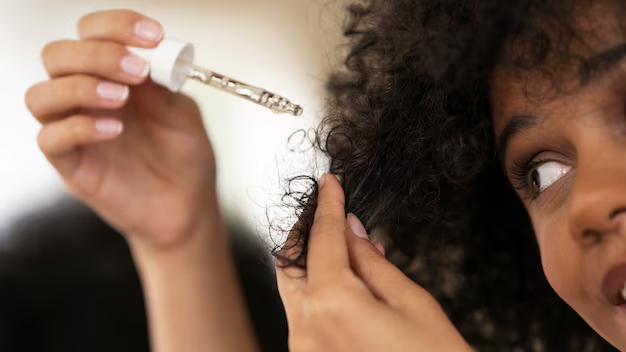
Image: Freepik
It’s only wise to test a product before you use it so that you don’t end up using the wrong products and vendors. The question of “How do I do a hair dye patch test?” Patch testing hair dyes before using them, for 48 hours or two full days, is highly recommended by experts. This length of time is required to allow any possible symptoms to develop, as allergic reactions from hair dye often take their sweet time to come.
Please also note that during these 48 hours, do not rub the patch area or wash it or wear tight clothing over it, so that the disturbance does not interfere with the results. By now, you’re probably wondering, ‘How do I do a hair dye patch test at home?’ We got you; here are the clear-cut guidelines to performing a proper patch test for hair dyes:
Note that if there is a reaction, do not use the dye on your hair. You should know when it’s time to throw the products out, and remember to always follow the product’s own instructions as well. Now, that’s how to do a hair dye patch test at home.
You can explore hair dye options that don’t contain these harmful substances, like PPD, resorcinol, parabens, ammonia, and certain fragrances and preservatives. However, to stay on the safer side, consider exploring more organic options. The best natural alternative to hair dye will save you the stress of dealing with allergies. Many women have tried options such as henna, indigo, and other herbal blends and found them to be the best natural alternatives to hair dye.
Note that you still have to do patch testing when using them, particularly when they have been packaged with artificial additives, but they’ll usually have way less drastic effects (if at all) when compared to the formulas with the above-named culprit chemicals mixed in them. If you’re still keen on trying other formulas other than natural ones, there are safe options such as temporary dyes and ammonia-free and PPD-free hair dyes to choose from too.
L’Oreal Paris gives practical tips on how to prep your hair and scalp before coloring it:
You don’t want to have to deal with hair loss or shedding, so please observe these guidelines religiously.
Image: Freepik
We have talked about this a bit in the last part. But for further clarification, while you dye your hair, always.
Now, just a little side note: leaving dye on longer doesn’t deepen color; it increases the risk of experiencing allergic reactions from hair dye over time. So don’t leave it on longer than necessary.
After applying dye to your hair, rinse thoroughly with lukewarm water. Avoid using any harsh shampoos for at least 48 hours. A soothing conditioner or calming scalp serum can help reduce any inflammation you may have gotten after the process. If your hair feels unusually dry afterwards, consider seeing a specialist to address the moisture imbalance. This might look like overkill, but honestly, the right hair care is worth investing in.
Allergic reactions to hair dyes can be delayed, so keep an eye out for symptoms up to 24–72 hours after application. This delayed reaction is why many people circle back to the question, “Can I suddenly become allergic to hair dye after years of use?” But delayed reactions are actually common with contact allergens; it’s just that the fact isn’t popular knowledge. Pay attention to:
Delayed awareness is still valid awareness.
If symptoms are mild:
You can also try herbal rinses like chamomile or aloe, as they soothe your hair and scalp without aggravating the irritation.
Seek medical attention if you notice:
This is not the time to “wait and see.” Rush to the hospital immediately, because severe allergic reactions from hair dye require prompt medical care.
Long-term safety is about strategy, not restriction. You may need to:
We understand your need to express yourself via exercising color freedom with your hair, but not at the expense of your health. This article was written to make you aware of allergic reactions from hair dye and how you can test to see if you’re prone and what it may mean for long-term usage so that complications can be avoided.
Look for itching, redness, swelling, or blistering around the scalp, ears, or face within 72 hours.
It’s a small skin test done 48 hours before coloring. If you’re unsure of how to do a hair dye patch test at home, always follow the manufacturer’s instructions carefully.
They can be gentler, but reactions are still possible. Patch testing remains essential.
Choose safer formulas, space out coloring, and prioritize preventing hair dye allergies through testing and scalp care.