
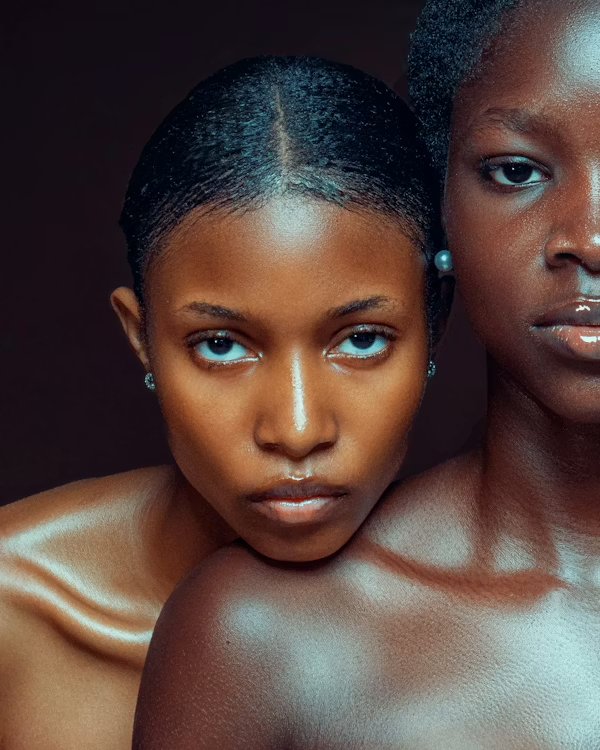
Have you ever looked at someone and thought, “She’s beautiful,” but not necessarily felt drawn to her? Or met someone who wasn’t conventionally beautiful, yet somehow everyone seemed to really like them?
That right there is where the difference between beauty vs attractiveness lies. Beauty is often something we recognize quickly. Attractiveness, on the other hand, tends to reveal itself slowly, through presence, personality, confidence, and the way someone makes us feel. Understanding the difference between beauty and attractiveness doesn’t just change how we see others. It changes how we see ourselves.
Beauty is usually the first thing we notice. It’s visual. Something we notice immediately is often shaped long before we get a chance to question it.
When we talk about beauty, we’re usually talking about:
In a lot of ways, beauty is a collective agreement. We all easily agree on what looks “good” at a particular time and place. And because beauty standards change, what was considered beautiful now may not be seen the same ten years later. This doesn’t mean that beauty is fake. It just makes it contextual.
Beauty is something you can see without interacting with the person. This explains why beauty, on its own, doesn’t always create a connection.
You don’t become immediately attracted to a person. Attraction comes gradually. It’s something you feel, not really something you notice. It’s less about looks but more about presence: how the person carries herself, how she talks, her sense of humor, or even her mannerisms.
You’ve likely experienced this before; you meet someone who didn’t stand out to you at first, but then, as you interact, the same person becomes more interesting to you. You may have also experienced someone with a striking appeal, but once you start interacting with that person, you lose interest.
This is because attractiveness is relational. It’s shaped through interaction. It grows or disappears through interaction. Social psychology shows that nonverbal cues like posture, facial expression, tone, and responsiveness strongly influence how attractive someone is perceived over time.
If you think about the people in your life that you genuinely like hanging around, the chances are that it has nothing to do with their looks. It could be the warmth and safety in their presence, their humor, or the way they make conversations feel easy. The feeling that you don’t have to perform around them. The feeling that you can simply be yourself around them. In simple terms, how someone makes you feel matters more than their looks.
We often talk about confidence like it’s something big and bold. Real confidence is not always about being loud; it’s simpler than that.
You see it in how someone stands without shrinking. How she speaks without over-explaining, or how she allows pauses instead of rushing to fill space. How she does not apologize for having needs or opinions. This calmness comes with someone who trusts herself, even if she’s still figuring things out. And confidence boosts attractiveness.
If beauty feels complicated or exhausting at times, that is not a good sign. We’re constantly shown narrow versions of what’s “ideal.” Certain faces, bodies, and ages. And when those images repeat enough, they start to feel like expectations instead of suggestions.
These expectations and standards put you under pressure, not necessarily to look good but to look a certain way. It makes you want to fit a narrative instead of just being yourself. Hence, most women burn out trying to fit into this “perfect picture.”
The twist is that even these beauty standards shift and change very easily. So it’s best to stick to who they are and what builds connection; they are subject to epileptic changes. Confidence, ease, authenticity, and warmth are qualities that are rare and are always attractive, regardless of trends.
You may have noticed this, even if you’ve never said it out loud. Someone can be very beautiful, and yet you find it difficult to build a connection with that person. You notice that interacting with this person feels tense, guarded, and performative. You just like the person’s looks but not their personality.
People who are not comfortable and confident in themselves often find it difficult to build connections with others. Their discomfort can show up as stiffness, defensiveness, or emotional distance, and these things do not invite or encourage connection. Attractiveness depends less on how someone looks and more on how open they are to being experienced.
You’ve probably wondered about this at some point. How is it that someone who doesn’t meet conventional beauty standards can walk into a room and immediately feel appealing? Why do people lean in, stay longer, and laugh more easily around them?
The simple answer is this: they’re just easier to be around. When someone isn’t relying on their looks to carry the interaction, they tend to develop other ways of connecting. Over time, those ways become their strength.
Because they’re not trying to impress visually, they focus more on the interaction itself. They genuinely listen and are open to interacting and building genuine connections. They’re not constantly checking how they’re perceived, so the conversation feels natural, not forced. For someone who does this, there’s no tension or pressure around them. When you’re around them, you don’t feel like you’re being evaluated, and you’re not evaluating them either. You’re just there, together. That comfort is powerful.
Psychologically, we’re drawn to people who make us feel relaxed and accepted. Our nervous systems respond to ease. When someone feels settled in themselves, your body registers it as safety, and safety builds attraction. This is why their personality feels so appealing. Not because it’s loud or flashy, but because it’s grounded. They’re not under pressure to be liked or for approval, so there’s no performance with them. When there’s no performance, there’s room for connection. And connection is what attraction is built on.
You know the interesting thing? You don’t need cosmetic surgery to fix yourself to become more attractive.
Attractiveness grows when you take care of yourself in ways that actually support who you really are, the real you. Here are some practical ways you can groom yourself:
What to ease off on:
When you feel better in your body and your routines, your energy shifts. This might just be the only beauty guide you’ll ever need; do what makes you confident in your skin. You’ll start to show up differently, and people will notice that.
Embracing your beauty doesn’t mean forcing yourself to love every one of your features. It means understanding that your beauty isn’t limited to physical looks or trends. Your unique beauty is found in the way you express yourself, your style, the energy you bring into the room, your presence, your carriage, and your mindfulness.
Learn to stop measuring yourself against societal perceptions and unrealistic expectations. Instead, focus on working on yourself to be a better version of yourself. You’ll see that your confidence and your glow will emerge. You will feel more at ease, and ease is attractive.
Wrapping up, beauty and attractiveness are connected, but they’re not the same. Beauty is often about looks. Attractiveness is about personality and connection. When you understand that, your mentality and thinking will change. The focus will no longer be about looks but about being your true and better self. That is a much kinder place to be.
Beauty is often visual and culturally defined. Attractiveness is relational, shaped by personality, confidence, and how someone makes others feel.
Yes. Confidence, communication, presence, and self-awareness can significantly increase attractiveness without altering appearance.
Confidence signals self-trust and ease, making people feel more comfortable and drawn to you.
Beauty standards are heavily influenced by culture, media, and trends, though some preferences feel familiar across societies.
Because attractiveness is influenced by energy, authenticity, and emotional connection, not just looks.
Absolutely. Warmth, humour, and empathy often outweigh physical appearance in long-term attraction.