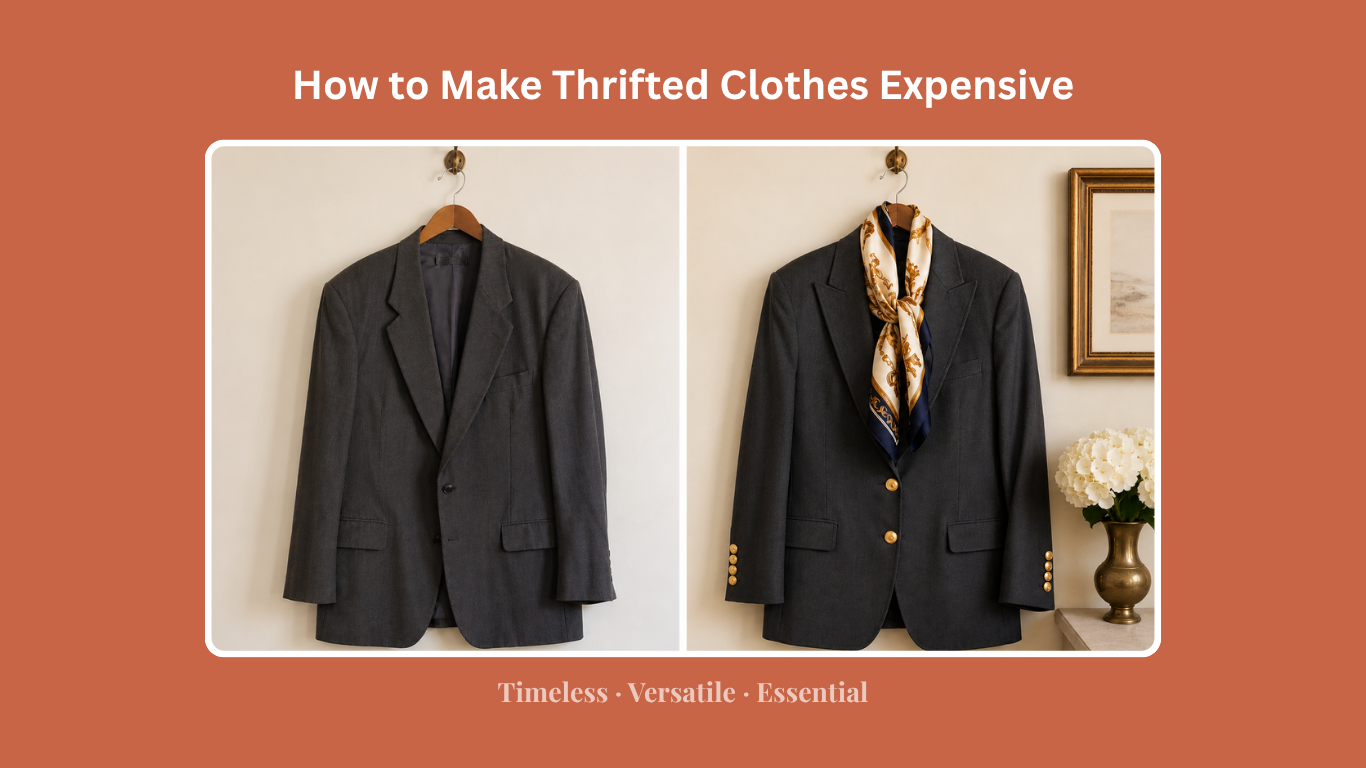
Expensive-looking outfits have little to do with price and everything to do with styling. If you’ve ever wondered how to make thrift clothes look expensive, the answer is simpler than it looks. You just need to focus on fit, fabric, and finishing details (F3).
With the right approach, even second-hand pieces can appear polished, elevated, and thoughtfully put together. Thrifted clothing becomes stylish when it’s worn with intention; coordinated colors and subtle accessories can upgrade any look. By paying attention to small details like ironing, tailoring, and minimal layering, you can transform budget thrift wear into modern, expensive-looking outfits that reflect confidence and personal style.
Why “Expensive” is About Styling, Not Price
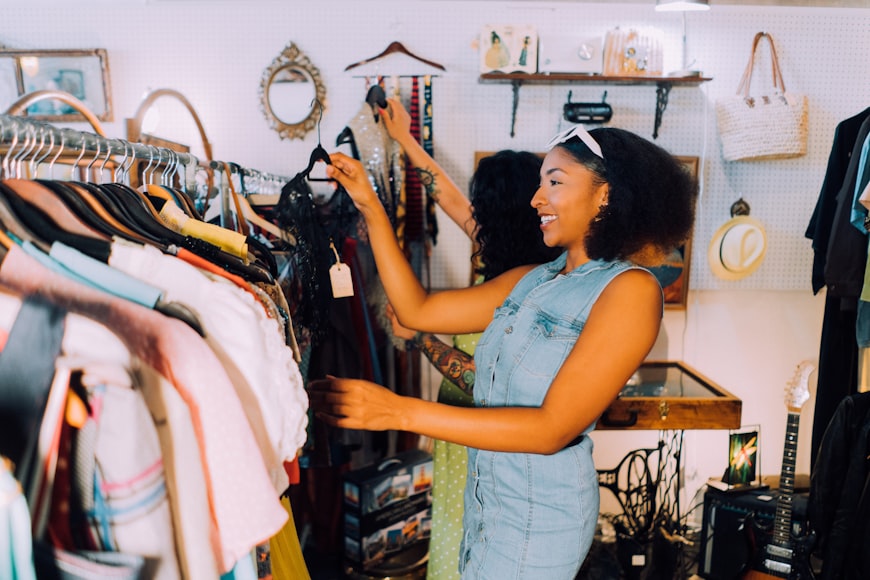
Looking expensive has less to do with how much money you have to spend and more to do with how you style what you already own. The key pillars are fit, proportion, and intention. When clothing is neither too tight nor too loose, it appears more refined.
Proportion matters just as much; balancing silhouettes creates visual harmony. According to fashion psychologist Dr. Carolyn Mair, people often associate simplicity and cohesion with higher value because it signals confidence and control. This means you don’t need a wardrobe full of designer labels, just a curated selection of well-chosen items.
Also, paying attention to details such as grooming, fabric quality, and coordination can transform even the simplest outfit. Ultimately, dressing expensively is about making deliberate choices that communicate polish and self-awareness, rather than relying on price tags.
What Makes an Outfit Look Cheap(and How to Avoid It)
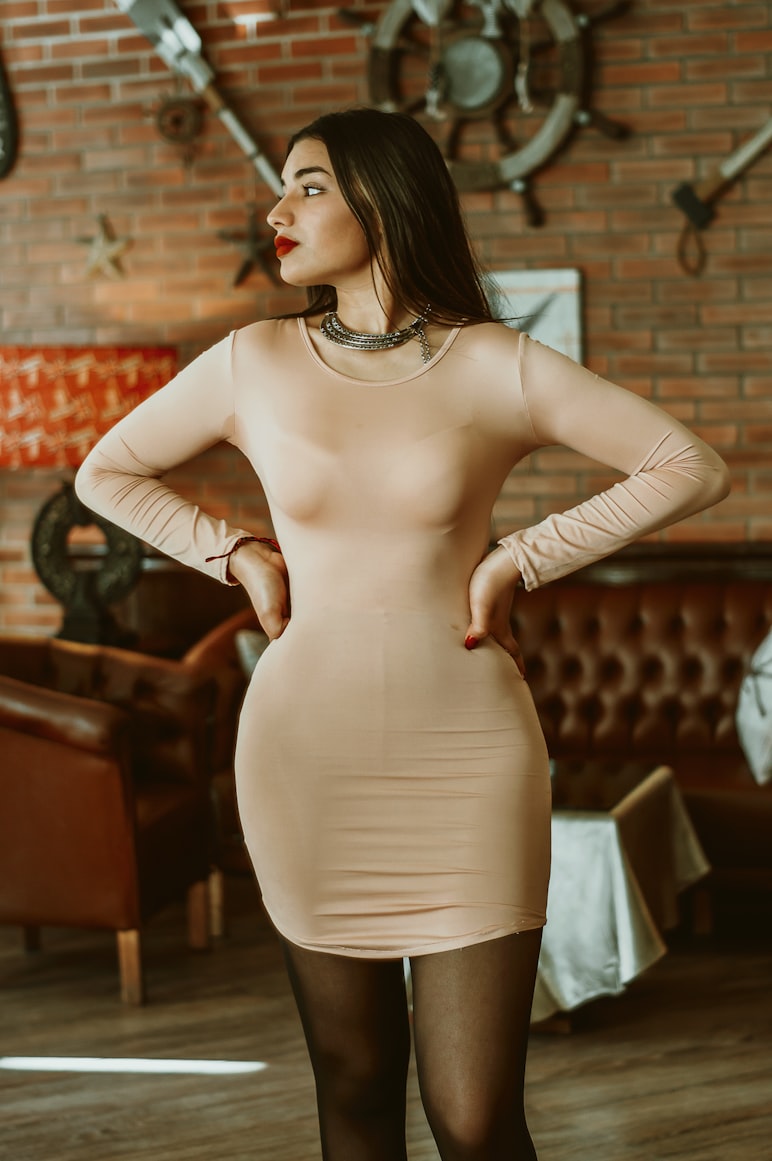
Certain styling can make even expensive outfits look cheap. One of the common issues is poor fit. Clothes that are too tight, too baggy, or improperly tailored disrupt the overall look.
According to image consultant Sarah Shah, ill-fitting clothing is the fastest way to undermine an outfit’s perceived value because it signals a lack of attention to detail. Over-accessorizing is another frequent problem; wearing too many statement pieces at once can create visual clutter, making the outfit feel chaotic rather than sophisticated.
To avoid these pitfalls, focus on fit, moderation, and maintenance. Choose pieces that complement your body, keep accessories intentional, and treat your clothes with care. These small changes can dramatically elevate your overall look, making even budget-friendly outfits appear polished and classy.
The 7 Expert Styling Tips
1. Prioritize Fit Over Everything
Fit is the foundation of great style. No matter how expensive a garment is, if it doesn’t fit properly, it won’t look good. Well-fitted clothing enhances your body shape, creates clean lines, and gives your outfit a tailored, intentional fit.
According to stylist Stacy London, “Fit is the difference between looking dressed and looking styled.
Tailoring is one of the best ways to attain this. Simple adjustments, hemming trousers, cropping a top, or shortening sleeves can transform off-the-rack clothing into something that looks custom-made. Even affordable pieces can appear luxurious when they fit properly.
Understanding your body type helps you select the right outfit that gives you the fit you want. These subtle adjustments create balance and elevate your overall silhouette. Prioritising fit ensures that every outfit looks polished, intentional, and effortlessly stylish, regardless of the price.
2. Stick to a Cohesive Color Palette
A cohesive color palette is a powerful tool for creating an expensive-looking outfit. When colors work harmoniously together, the overall look feels intentional and refined. Neutrals such as black, white, beige, and navy are especially effective because they are timeless and easy to pair.
According to stylist Allison Bornstein, neutral tones create a “visual calmness” that is often associated with luxury. Tonal dressing, wearing different shades of the same color, is another effective technique. For example, combining light beige and deep caramel tones creates depth while maintaining cohesion.
Using clean color combinations also plays a role. Limiting your outfit to two or three complementary colors prevents it from looking overwhelming. Building a wardrobe around a core color palette makes mixing and matching easier, ensuring that most pieces work together.
3. Elevate With Shoes and Bags
Shoes and bags have the biggest impact on how an outfit is perceived. Even a simple outfit can look elevated when paired with the right accessories. According to Stylist Tan France, accessories are the “finishing touch” that can transform an entire look.
Quality matters more than quantity in this case. A well-made pair of shoes or a structured bag can make a normal outfit look polished.
Condition is equally important. Scuffed shoes or worn-out bags can detract from an otherwise polished outfit. Regular cleaning and proper storage help maintain their appearance. Whether it’s a sleek pair of loafers or a structured handbag, the right accessories do the heavy lifting in elevating your look.
Investing in a few high-quality pieces can make even the simplest outfit look refined.
4. Steam, Press, and Care for your Clothes
Garment style is one of the overlooked aspects of style, yet it plays a crucial role in how expensive a garment appears. Wrinkles, creases, or signs of wear can instantly downgrade the appearance of a cloth, regardless of the purchase costs.
According to textile expert Deborah Young, fabric condition is a key indicator of perceived quality. Steaming or pressing your clothes ensures they look crisp and well-maintained. A wrinkle-free outfit communicates attention to detail and effort.
Small efforts make a difference. Using a lint roller, repairing loose threads, and keeping white bright also contribute to a more refined look. These details may seem minor, but they collectively enhance the overall impression of your outfit.
Keeping up with care and maintenance leaves your wardrobe looking fresh, polished, and effortlessly expensive.
5. Balance Statement Pieces with Basics
Creating an expensive-looking outfit often comes down to restraint, especially when working with statement pieces. Bold items such as brightly colored blazers, patterned trousers, or oversized accessories can elevate an outfit, but wearing too many at once can overwhelm the outfit.
According to stylist Tan France, balance is key; if everything’s loud, nothing stands out. This is why pairing statement items with simple, neutral basics creates a more refined and intentional appearance.
Avoiding too much at once also helps maintain sophistication. Overlayering bold prints, textures, and accessories makes an outfit look chaotic rather than curated. Instead, focus on one focal point and build your outfit around it. Mastering this balance allows you to express personality while maintaining elegance, proving that thoughtful styling, not excess, is what truly makes an outfit elevated.
6. Choose Timeless silhouettes over Trends
Timeless silhouettes are the backbone of the wardrobe that looks consistently polished and expensive. Unlike fast-changing trends, classic cuts such as tailored blazers, straight-leg trousers, midi dresses, and structured coats remain stylish across seasons.
These silhouettes also tend to photograph better and age gracefully. According to stylist Allison Bornstein, building a wardrobe around timeless items creates a style uniform that simplifies dressing while ensuring a cohesive look.
Trend-driven pieces can quickly look outdated, while classic shapes maintain their relevance over time. Investing in timeless pieces also supports sustainability. By choosing items that won’t go out of style quickly, you reduce the need for constant replacement.
This aligns with a more mindful approach to fashion, moving away from impulse buying. Ultimately, prioritizing timeless silhouettes ensures that your wardrobe remains versatile, elegant, and sophisticated, regardless of changing trends.
7. Wear it with Confidence
Confidence is the final and most powerful element of looking expensive. Even the most perfectly styled outfit can fall flat without the right presence. Posture, grooming, and self-assurance all contribute to how an outfit is perceived. Confidence influences not only how others see you but also how you carry your clothing.
Good posture instantly elevates your appearance. Standing tall with relaxed shoulders creates a sense of poise and authority, making an outfit look more intentional. Grooming is also important; neat hair and clean nails with gentle makeup enhance overall appearance.
Self-assurance is the key to all this. Being comfortable in what you wear makes you appear confident and allows you to interact properly. Understanding what works for your body and personal taste helps you make more intentional choices.
Smart Thrifting Strategies
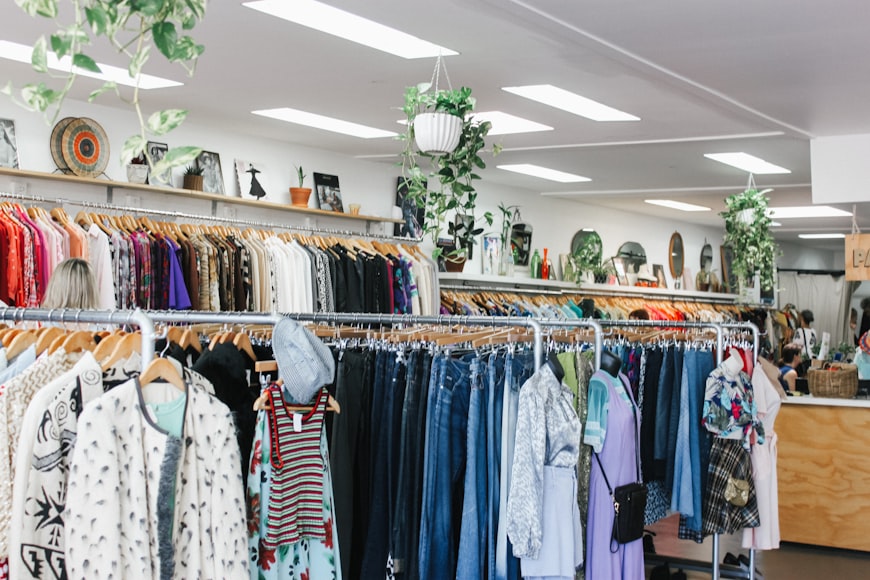
What to Look for When Thrifting
There’s an old saying: rare dresses are found in thrift collections. The most powerful way to build a quality wardrobe is by buying from thrifts. Not all thrift stores are local, wear-and-tear material. High-quality fabrics are one of the most important indicators of value. Natural materials like cotton, wool, linen, and silk tend to be more expensive than synthetic alternatives.
Labels can also provide clear insight; there isn’t much difference between designer brands and lesser-known label brands. Take your time to pick out the material you really need. Focusing solely on designer brands can cause shoppers to overlook high-quality pieces.
Fit potential is equally important. Even if an item purchased isn’t giving the perfect fit, it can be tailored and adjusted to a perfect fit. Just as long as you love the garment, reconstructing it wouldn’t be an issue.
What to Avoid Even if it’s Cheap
Not every bargain is worth buying, and learning what to avoid is as good as understanding what to look for. Poor fabric quality is a major red flag. It’s easier to identify because of its worn-out and faded appearance, though some still shine, but the material will undoubtedly be thin and appear weak.
Dated cuts are also another issue; not all silhouettes should be purchased and kept in the wardrobe. Pieces that can’t be styled with others shouldn’t be purchased, as they end up unworn.
Irreparable damage, like a big tear or a stain, is usually impossible to fix, and more damage could be caused by trying to fix it. Damage that affects the structure of a garment affects its longevity.
Also, impulse purchases are another contribution. Just because it’s cheap doesn’t mean it needs to be an addition to your wardrobe. If one is able to notice these signs, it would be easier to avoid getting a bad garment.
Making Thrifted Pieces Work in a Modern Wardrobe
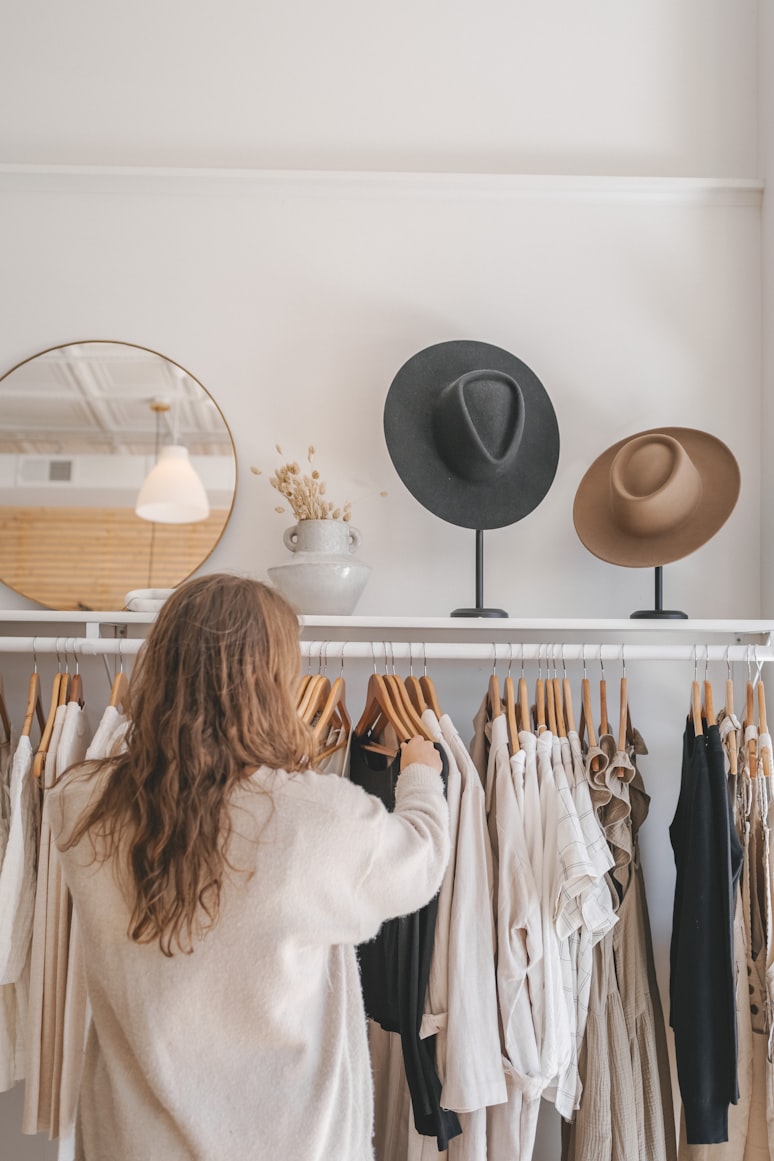
Blending thrifted pieces into a modern wardrobe is less about hiding their origin than styling them into something better. The goal is to create a seamless mix of second-hand finds and everyday staples so your outfit feels current and not costume-like.
Many thrifted items may not align perfectly with modern cuts, so small tailoring adjustments can make a difference. Use of accessories also modernizes thrifts.
Ultimately, cohesion is what makes the look successful. When thrifted items are styled thoughtfully with everyday staples, they feel fresh, versatile,, and effortlessly integrated into a modern wardrobe.
Conclusion
Thrifted clothes can look just as polished and elevated as high-end pieces when styled with intention. It’s not about the price tag but how you wear and care for your clothing. Prioritising fit, maintaining fabric, and styling with balance all contribute to a refined appearance.
Most importantly, confidence brings everything together; how you carry yourself often defines how your outfit is perceived. With the right approach, thrifted fashion becomes a powerful, stylish, and sustainable way to dress well without overspending.
FAQs
Can thrifted clothes really look expensive?
Yes. When thrifted pieces fit well and are properly cared for and styled with intention. They end up looking like high-polished fabric
What fabrics look most high-end when thrifting?
Natural fabrics like cotton, wool, linen, and silk tend to look expensive. They hold structure better, age well, and often feel more refined than cheap synthetic materials.
Is tailoring worth it for second-hand clothes?
Absolutely. Simple adjustments like hemming or taking in seams can transform thrifted items into perfectly fitted pieces, making them look custom-made and far more polished.
How do I style thrifted outfits without looking outdated?
Mix thrifted items with modern basics, like fitted jeans or plain tops. Add contemporary accessories to keep the overall look fresh and balanced.
What accessories elevate budget outfits?
Structured bags, clean shoes, and minimal jewelry can instantly upgrade an outfit. Neutral tones and classic design tend to look more refined and versatile.
How do I avoid thrifted clothes looking messy?
Ensure clothes are kept clean, wrinkle-free, and in good condition. Avoid items with visible damage and use simple styling to keep your outfit clean.

Staff writer at Women Digest covering beauty, fashion, wellness and life.