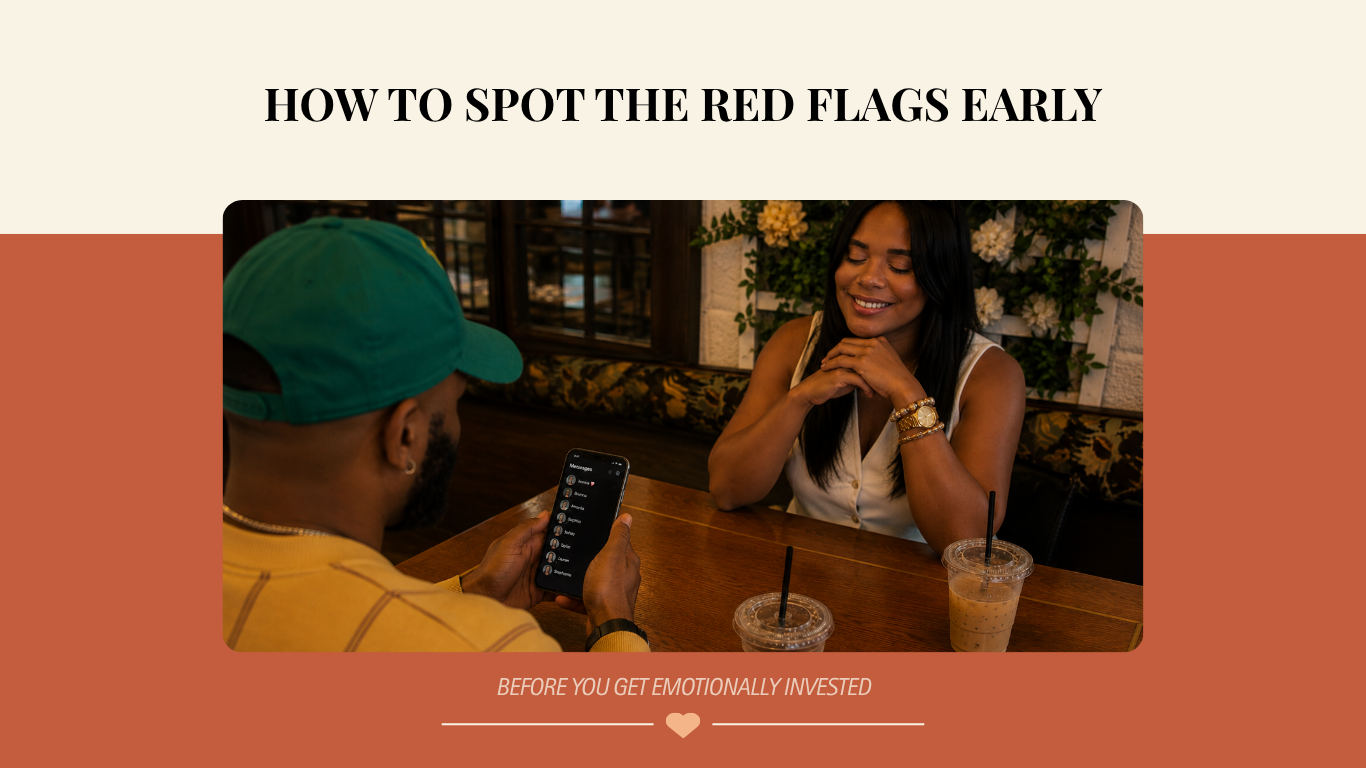
Staycee and Ethan have been together for six months. At first, Ethan was attentive. He made Staycee feel chosen, checking in, asking questions, and showing interest in her world. But somewhere along the line, that version of him started to fade ever so slowly.
He stopped explaining. He brushed off her concerns when she tried to talk about them. Nothing he did felt big enough to leave over, and that’s what made it confusing. Staycee found herself questioning her reactions more than his behavior. And even when she was in pain, she stayed because she kept thinking of the good things at first. This is how most relationships with red flags start.
What are red flags?
A red flag is a behavior, pattern, or trait that signals something is fundamentally unhealthy, emotionally, mentally, or relationally in a relationship. It is a repeated behavior or pattern that signals a potential problem in a relationship. It threatens emotional safety, trust, or stability and often worsens over time if ignored.
Red flags aren’t about one bad day or a single mistake; they’re about consistency, not coincidence. Red flags aren’t mere quirks or misunderstandings. And they’re not things you can “love someone through.”
For clarity:
- Red flags are universally harmful behaviors.
- White flags are neutral traits, neither good nor bad,, and depend on personal preference.
- Green flags are positive traits that support healthy relationships.
Understanding the difference matters because not everything uncomfortable is a red flag, but every red flag becomes more expensive when ignored. Is he serious about me?
Examples of Red Flags, White Flags, Green Flags (and Black Flags)

Not every “flag” in dating means the same thing. Some behaviors are universally unhealthy, some depend on personal preference, and others signal emotional safety.
Red Flags (Problematic for Everyone)
These are behaviors that undermine emotional safety and stability in any relationship, regardless of personality or preference. They are not “phases.” They are patterns.
Common red flags include:
- Consistent dishonesty or half-truths
- Emotional withdrawal instead of communication
- Dismissiveness when concerns are raised
- Manipulation, gaslighting, or shifting blame
- Lack of accountability
- Making you feel small for expressing needs
- Excessive or irrational jealousy
- Unaddressed addiction issues
- Violent tendencies or aggressive behavior
- Controlling behavior
- Financial recklessness
- Substance abuse
Red flags signal ongoing issues that, if ignored, usually escalate over time.
White Flags (Depends on the Woman)
White flags aren’t good or bad on their own. They’re neutral traits that depend on what you value and are willing to compromise on in a relationship.
Examples include:
- Introverted vs. extroverted
- Slow texter vs. fast texter
- Highly independent vs. very involved
- Career-focused vs. relationship-focused
What feels like a deal-breaker to one woman may feel completely fine to another. You need to be very clear about what you want, what’s not negotiable, and what’s a personal deal breaker for you in order to find out where you can make compromises with white flags. Some women will do anything to please a man, even if it means giving up things that are important to them.
Green Flags (Healthy Indicators)
These are signs of emotional maturity, safety, and genuine intention. Green flags include:
- Clear and honest communication
- Consistency between words and actions
- Willingness to repair after conflict
- Respect for boundaries
- Emotional availability
Green flags don’t create anxiety. They create steadiness and trust.
Black Flags (Non-Negotiable Deal-Breakers)
A black flag goes beyond a red flag. It signifies severe, toxic, or dangerous behavior that threatens your emotional, mental, or physical well-being and often requires an immediate exit from the relationship.
Black flags include:
- Physical, emotional, or sexual abuse
- Extreme control or isolation
- Repeated and severe betrayal
- Complete lack of empathy or remorse
- Any behavior that makes you feel unsafe
Unlike red flags, these issues are not fixable with patience, communication, or compromise.
Red Flag vs. Black Flag: What’s the Difference?
| Red Flags | Black Flags |
| Warning signs of potential problems (e.g., poor communication, jealousy) that may be addressed if both people are willing to work on them. | Clear deal-breakers that indicate severe harm or toxicity. They signal that the relationship is unsafe or beyond repair and that leaving is necessary for your well-being. |
Simply put:
- A red flag says: “Slow down and pay attention.”
- A black flag screams, “Stop. This is not safe.”
Many people confuse red flags and black flags because they can look similar at first, but the impact and risk are very different. Because we all want different things, it’s important to define your personal red flags, your non-negotiables. These are boundaries you set based on your values, needs, and emotional capacity. What you tolerate teaches people how to treat you.
And here’s the truth most women learn too late: You don’t need a dramatic reason to leave. Discomfort is enough. Feeling unseen is enough. Losing yourself is enough.
10 Signs He’s Just Wasting Your Time

Image: istockphoto
This isn’t about demonizing him or turning dating into a checklist. It’s about noticing patterns early, before confusion turns into self-doubt. Here are signs to know hes wasting your time.
Inconsistent Communication
He frequently disappears without explanation. Replies come late, minimal, or randomly enthusiastic. Some days he’s present, other days he’s unreachable. Conversations rarely deepen, and meaningful connections feel avoided rather than delayed.
Avoids Defining the Relationship
Any attempt to clarify “what this is” gets dodged, joked away, or postponed indefinitely. He stays vague about the future and avoids commitment language, even when his actions suggest intimacy. Is he serious with me?
Little Effort to See You
He rarely initiates plans. Dates are often cancelled or left open-ended. Your availability feels like an afterthought, and an in-person connection seems inconvenient rather than desired.
Mixed Signals
One day, he’s affectionate, attentive, and flirtatious. The next day, he’s distant or emotionally unavailable. Compliments are given without follow-through, leaving you trying to interpret what’s real.
Talks About Himself, Not You
The conversation revolves around his stories, his struggles, and his opinions. There’s little curiosity about your inner world, and meaningful questions are rare. Everything stays surface-level.
Avoids Accountability
When inconsistency is pointed out, he blames circumstances, stress, or timing. Apologies are missing or hollow. Your concerns are dismissed, minimized, or reframed as overreactions.
Keeps His Options Open
He casually mentions dating others, avoids exclusivity, and keeps emotional distance “just in case.” Commitment feels like something he’s protecting himself from rather than moving toward. Keeping options open usually means keeping you unsure.
Always “Too Busy.”
Being busy becomes a permanent excuse. Time for connection is rare, and effort is replaced with explanations. Work, hobbies, or life demands are used to justify emotional absence. Busy people still make time for what matters.
Makes You Feel Insecure
Through subtle teasing, criticism, or inconsistency, you start doubting yourself. Your concerns are minimized, and emotional confusion becomes a recurring state rather than a passing moment. Healthy interest doesn’t erode your confidence.
Your Gut Tells You Something Is Off
You feel anxious around interactions. Replay conversations. You feel undervalued or dismissed, even without “hard proof.” Something in you keeps whispering that this doesn’t feel right.
What to Do If You Notice These Signs
Noticing red flags isn’t about reacting impulsively. It’s about responding with self-respect.
- Reflect on patterns, not isolated moments
- Strengthen and honour your emotional boundaries
- Communicate observations calmly, without accusation
- Decide whether this dynamic aligns with your needs
- Trust what your body and emotions are telling you.
You don’t owe endless chances to inconsistency.
How to Protect Yourself While Dating

Image: istockphoto
Dating doesn’t have to feel like emotional exposure therapy.
- Maintain your independence and routines
- Avoid over-investing before consistency is shown
- Observe actions more than words
- Keep your support system active
- Practice self-validation instead of seeking reassurance
Concluding, when you recognize these signs as early as possible, it helps protect your time, energy and emotional well being. Someone’s true self isn’t revealed once but by consistent patterns over time. You set standards and also boundaries as to how you want to be treated. When you choose clarity over confusion; you avoid the risk of burnout. Ultimately, prioritize relationships that feel mutual and intentional because the right connection would never leave you questioning your worth. Know when to detect early relationship signs of disinterest
FAQs
1. How do I know if he’s serious or wasting my time?
Consistency reveals intent. If his words, actions and efforts align over time; he’s serious. But if communications are irregular, no plans or effort; he’s simply playing you
2. What are the early signs of a man not committed?
Inconsistent communication, always avoiding the topic on defining the topic, last minute plan, emotional availability and lack of curiosity about what’s going on in your life is a blaring raging red flag.
3. Should I confront him or step back?
Start with calm clarity, express what you need. If there are no changes. You should step back, efforts shouldn’t be one sided.
4. Can someone change if they show these signs?
Change is not impossible, and it’s possible with self awareness and consistent effort. Don’t stay hoping there could be a chance that he will change soon.
5. How do I protect my emotional energy while dating?
Set boundaries early, observe actions over word, pace emotional investment. Maintain routines, friendships and priorities. Don’t over exert yourself trying to build a perfect relationship which is eventually one sided.
6. What if I feel confused but still like him?
Confusion is a signal that it’s not going to work out, a perfect relationship wouldn’t have doubts. You can like someone and still choose clarity. Prioritize how he makes you feel and not how you feel about him.

Staff writer at Women Digest covering beauty, fashion, wellness and life.