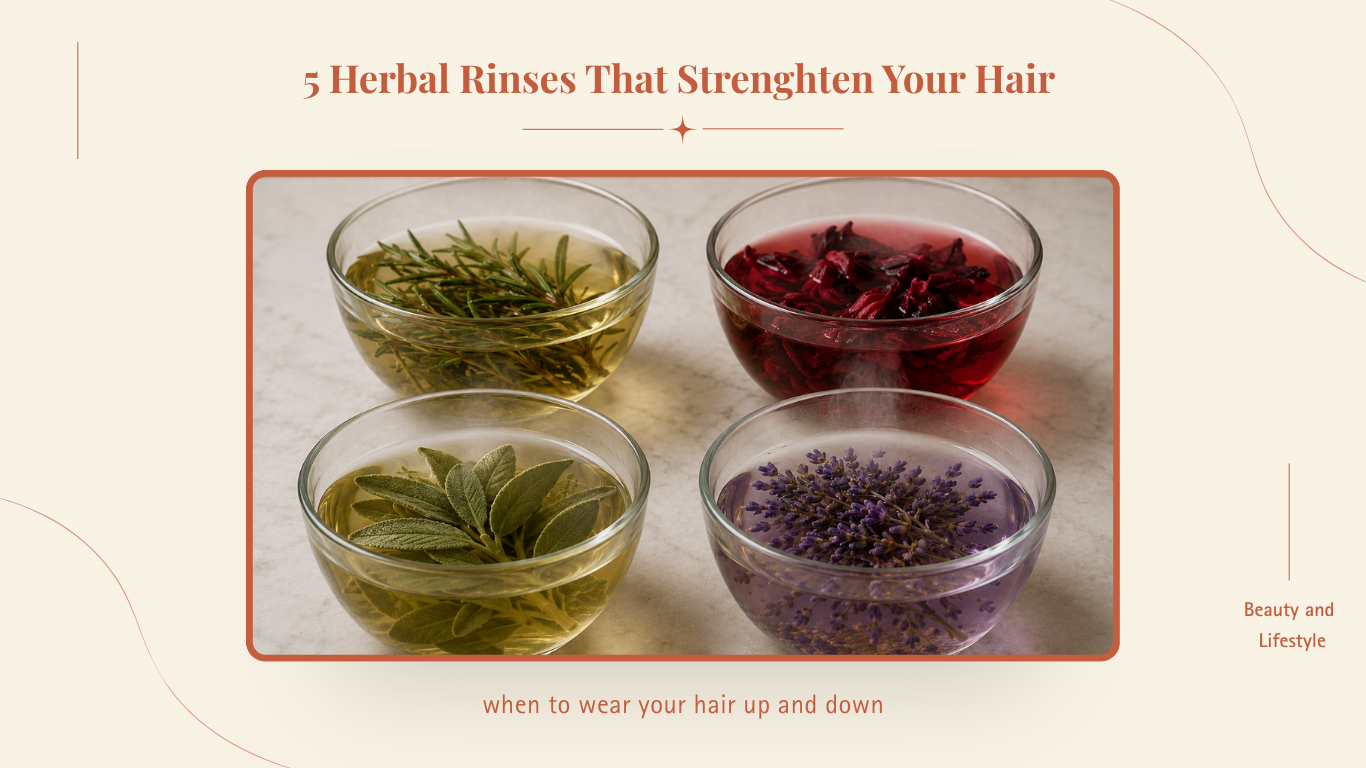
If you’ve ever thought about using a cup of tea for your hair you might be onto something. We usually think of taking care of our hair with creams and chemical treatments. Sometimes the best way to make your hair strong naturally is to look at plants.
Herbal rinses for hair aren’t magical potions that make your hair grow super fast but they’re really good at balancing your scalp and making your hair smooth. They work with how your hair grows to help it stay strong, shiny and not break easily. If you’re tired of feeling burnt out from beauty routines and want something that feels like a ritual, these plant-based rinses are a great place to start. They can help strengthen your hair naturally.
What Herbal Rinses Actually Do to Hair and Scalp
Image: istockphotos
To understand why herbal rinses for hair work, we need to look at the hair layers, which is the cuticle. Imagine your hair shaft is covered in shingles like on a roof. These shingles are like tiny scales. When they lie flat your hair is strong and shiny. It stays hydrated.
When they are raised, often due to heat or harsh shampoos or even the minerals in UK water, your hair feels like straw and breaks easily and the cuticle gets damaged. The raised cuticle makes the hair feel rough.
The pH Factor
Tap water is a bit alkaline and that makes the hair cuticle get big and stand up. But herbal rinses for hair are different; they are a bit acidic with a pH between 4.5 and 5.5. This acidity helps to calm the hair cuticle. Herbal rinses make hair feel really smooth and look shiny because when the hair cuticle is flat, it reflects light better than when it is rough.
Mineral Management
In the United Kingdom, a lot of women react to the hard water. This hard water has a lot of calcium and magnesium in it. When you wash your hair with hard water the calcium and magnesium stay on your hair and make it brittle.nThe good thing about using rinses is that they have light acids that can gently break down the tiny bits of calcium and magnesium.
Herbal rinses are like a cleaner for your hair. They help your hair by clearing the way for the good stuff in your hair products to really work on your hair. This means that the products you use to keep your hair moist can actually do their job better with a DIY herbal hair rinse.
Why Hair Strength Starts at the Scalp
We often focus on the ends of our hair because that’s where we see the breakage. Natural hair strengthening really starts at the scalp, which is like the soil for our hair. If your scalp is inflamed, oily or has circulation your hair follicles won’t grow strong hair.
Using herbal rinses for hair can help calm your scalp. Some herbs help to get blood flowing to the follicles. Others help clear dead skin cells or extra oil. A healthy scalp means less hair shedding and a stronger base for each hair that grows.
Unlike oils that can clog pores or smother your scalp, a water-based herbal rinse gives your hair nutrients without feeling heavy. This helps keep your scalp healthy and your hair strong. A healthy scalp environment is key to growing strong and beautiful hair. It helps prevent shedding and makes every hair strand stronger.
Five Herbal Rinses Your Hair Will Love
The harbal rinses your hair will love is as follows
Rosemary for Fibre Support
Rosemary is the “G.O.A.T.” (Greatest of All Time) of the hair world. It’s well known for helping blood circulation. When you use a rosemary rinse on your scalp it helps get more blood to the roots. This makes sure oxygen and nutrients reach the hair follicle.
Rosemary rinse is rich in strong antioxidants that protects your hair from damage caused by pollution and other environmental factors. Research shows that rosemary oil works as well as minoxidill, a common hair loss treatment. A rosemary rinse is a gentler option for daily use. It gives you the herbal hair rinse benefits without the greasiness of oil. This rinse is good for people with thinning hair, itchy scalps or anyone who feels like their hair growth has stopped.
Nettle for Mineral Reinforcement
If your hair feels weak or mushy especially after you have done a lot of chemical processing then stinging nettle is really good for you. Stinging nettle is one of the most amazing herbs that nature has to offer because it is full of silica and sulfur. The silica in stinging nettle is very important for your hair because it is a part of what makes up the hair shaft. It helps make your hair strong.
Stinging nettle is also very good at reducing inflammation. It helps to tighten up the skin on your scalp. This is great because it gives your hair the minerals it needs to be healthy and strong from being brittle and breaking easily. This rinse is perfect for women who have dry brittle hair that breaks, hair that has a lot of pores, oily hair.
Hibiscus for Elasticity and Smoothness
Hibiscus is often called the Botox for skin but for hair it is a natural emollient. The flowers of the Hibiscus plant are rich in acids and mucilage, a slippery substance that provides amazing natural slip. This helps your hair stay flexible so it does not snap when you brush it. Hibiscus contains Alpha Hydroxy Acids that help to chemically exfoliate the scalp removing dead skin cells that can block the hair follicles.
Hibiscus is very pigmented. If you are a platinum blonde, it will give you a strawberry pink tint. So be careful when you use it. Hibiscus is best if you have curly hair or frizzy hair that needs extra care.
Green Tea for Scalp Balance
Green tea has an antioxidant called EGCG. This antioxidant can actually stop the hormones that make your hair fall out. It is also very good for a red or flaky scalp. The caffeine in green tea can get into your hair roots and give a boost to the growth process. It also contains tannins that help control oil production on your scalp. Green tea is best if you have sensitive scalp, experience hair shedding with the changing of the seasons and dull hair.
Chamomile for Gentle Strength and Shine
Chamomile is really good for calming your scalp. It has something called apigenin which helps with scalp inflammation. This herb is gentle on your hair and makes the cuticle smooth and shiny without feeling heavy. Chamomile can make your hair a bit brighter. It won’t make it really light.
If you have light brown hair Chamomile will make it look nice and shiny like you just got back from a sunny vacation. Chamomile helps to reflect light on hair tones making them look vibrant. It’s a way to add some life to your hair without doing much. It’s best for women with fine hair that gets weighed down easily, sensitive scalps, and children’s hair.
How to Prepare and Use Herbal Rinses Safely
Making a hair rinse is easy like making a cup of tea.. You have to use the right amount. Use 2 tablespoons of dried herbs or 3-4 tea bags for every 500 ml of water. If you have rosemary use three sprigs that are 4 inches long. Let it sit for 20-30 minutes. The water should be dark.
You can boil nettle or rosemary for 10 minutes to make it stronger. Do not put the hot liquid on your scalp as it can damage your hair. Wait until it cools down. A cold rinse is actually good for closing your hair cuticles. Condition your hair like you normally do. Squeeze out the water so your hair is damp. Lean back. Slowly pour the rinse on your scalp and, through your hair. Catch the liquid and pour it again to make sure all your hair is covered.
Storage and Safety
These products are water-based. They do not have any preservatives. This means they go bad quickly. You can store a rinse in a glass jar in the fridge for up to 48 hours. After 48 hours you should throw the product away. If the rinse smells bad or looks cloudy you should not use the water-based rinse on your head.
What Herbal Rinses Can and Cannot Fix
It’s okay to get excited but being informed is more important. Herbal rinses for hair can’t fix a split end. If your hair ends are fraying you need to get a trim. They also can’t solve a medical problem like hair loss caused by thyroid issues.
Herbal Rinses can help reduce hair breakage by making your hair more flexible. They can make your hair feel really soft and look shiny. They can also help you go longer between washes by balancing the oil production on your scalp, with Herbal Rinses.
You should not use these hair treatments every day. Your hair needs a break from all the products. Using them one to two times a week is really good for your hair. The hair treatments have a spot and that is one to two times a week. Many women use the rinse and then they rinse it out with tap water right away. If you do that you are just putting the hard water minerals back on your hair. For the best results, the herbal rinse should be the last thing you put on your hair. Then just towel dry your hair.
Combining Rinses with Modern Care
You do not have to go to a lot of trouble to see good results from your herbal hair care rinses. These natural hair rinses work well with the hair products you already use at home. If you use a deep conditioning mask that’s very rich try using a natural hair strengthening rinse after it to lock in all the good stuff.
If you live in a city with a lot of pollution, using a tea rinse after you wash your hair will help get rid of the bad effects of the city air.
In conclusion, strengthening your hair does not always need a chemical made in a lab. You can make your hair stronger by using hair rinses made from plants like rosemary, nettle and hibiscus. This way you can have a hair routine that’s good for the environment, does not cost a lot and really works. Hair health takes time. You need to be consistent and patient. It is also important to learn what your hair needs. When you take care of your scalp like it is a garden and your hair like it is a thread you will be surprised at how well it grows.
FAQs
Do herbal rinses strengthen hair?
Yes, they help by smoothing the cuticle and providing the scalp with minerals like silica and antioxidants. This prevents breakage and creates a healthy environment for stronger hair to grow.
How often should I use herbal hair rinses?
Once or twice a week is perfect. Overusing them can sometimes lead to a slight buildup of tannins, so balance is key.
Can I use these on color-treated hair?
Mostly yes, but be careful with hibiscus (can tint blonde) and rosemary (can slightly darken very light hair over time). Chamomile is the safest for all colors.
Do I have to wash it out?
No! Leaving the rinse in allows the herbs to keep working on your scalp and keeps the cuticle sealed as the hair dries.

Staff writer at Women Digest covering beauty, fashion, wellness and life.